The Covering Is Making Slow but Steady Progress.
The covering, which went slowly in the first few days, is now going faster. Ketil has strengthened the "sewing club", and not least it turns out that "practice makes perfect". There are several techniques, knots and stitches that have to be learned as the work progresses. Everything is to be done the original way. Shortcuts are a non-issue.
The covering that was a slow process in the first few days is now going faster. Ketil has strengthened the "sewing club", and not at least it turns out that "practice makes better". There are more techniques, knots and stitches that must be learned as the work progresses.
Everything should be done in the original way. Shortcuts are a non-issue.
Click on the pictures
Read more
- Sewing course Video
- A little knot course Video
© Arvid Martinussen (AM)
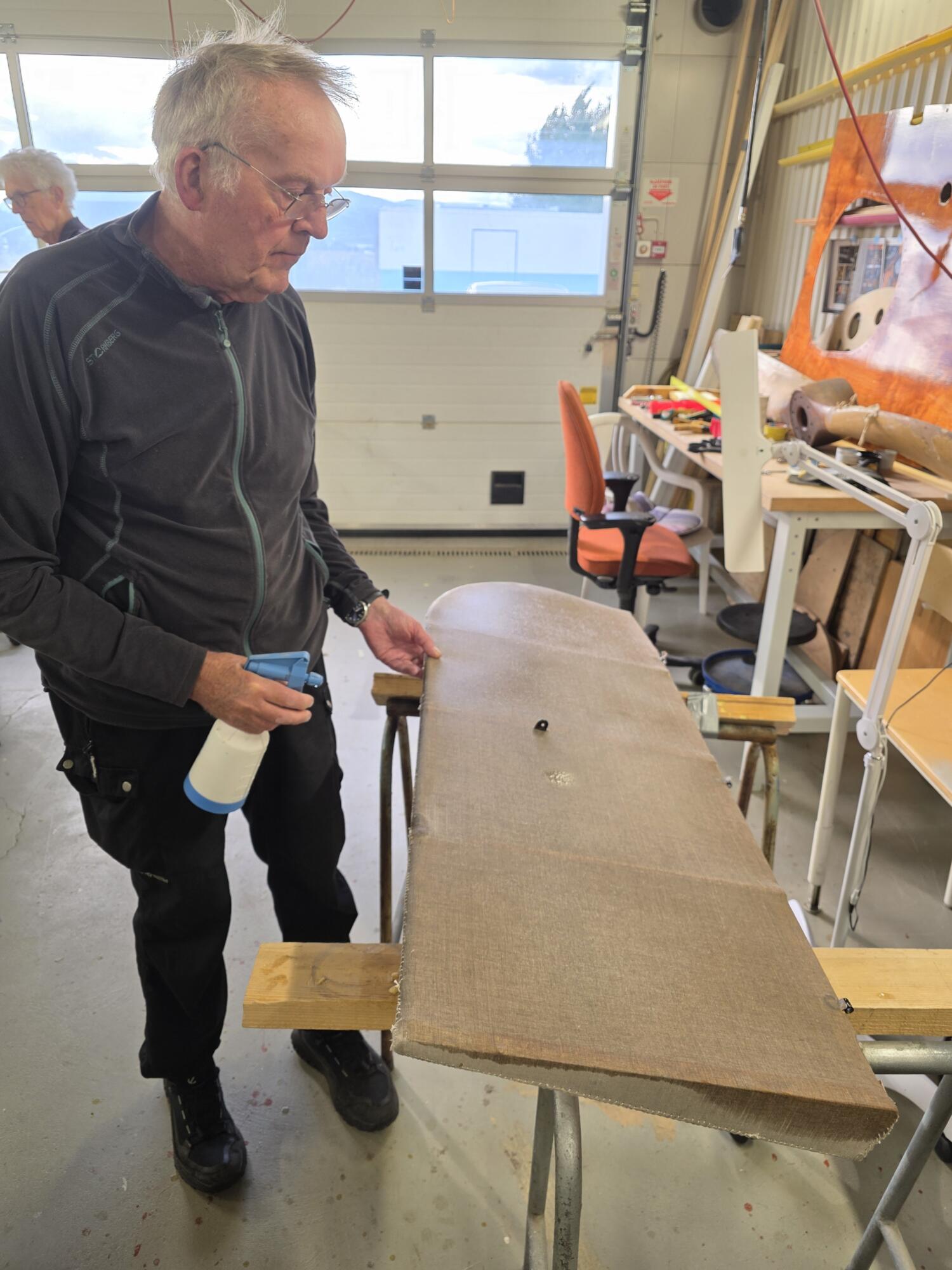
15.09: Once the fabric has been sewn on, it is dampened with water. It shrinks and tightens when wet. When it dries, some of the shrinkage reverses, but not back to the original. The result is that it has become somewhat tighter.
© AM
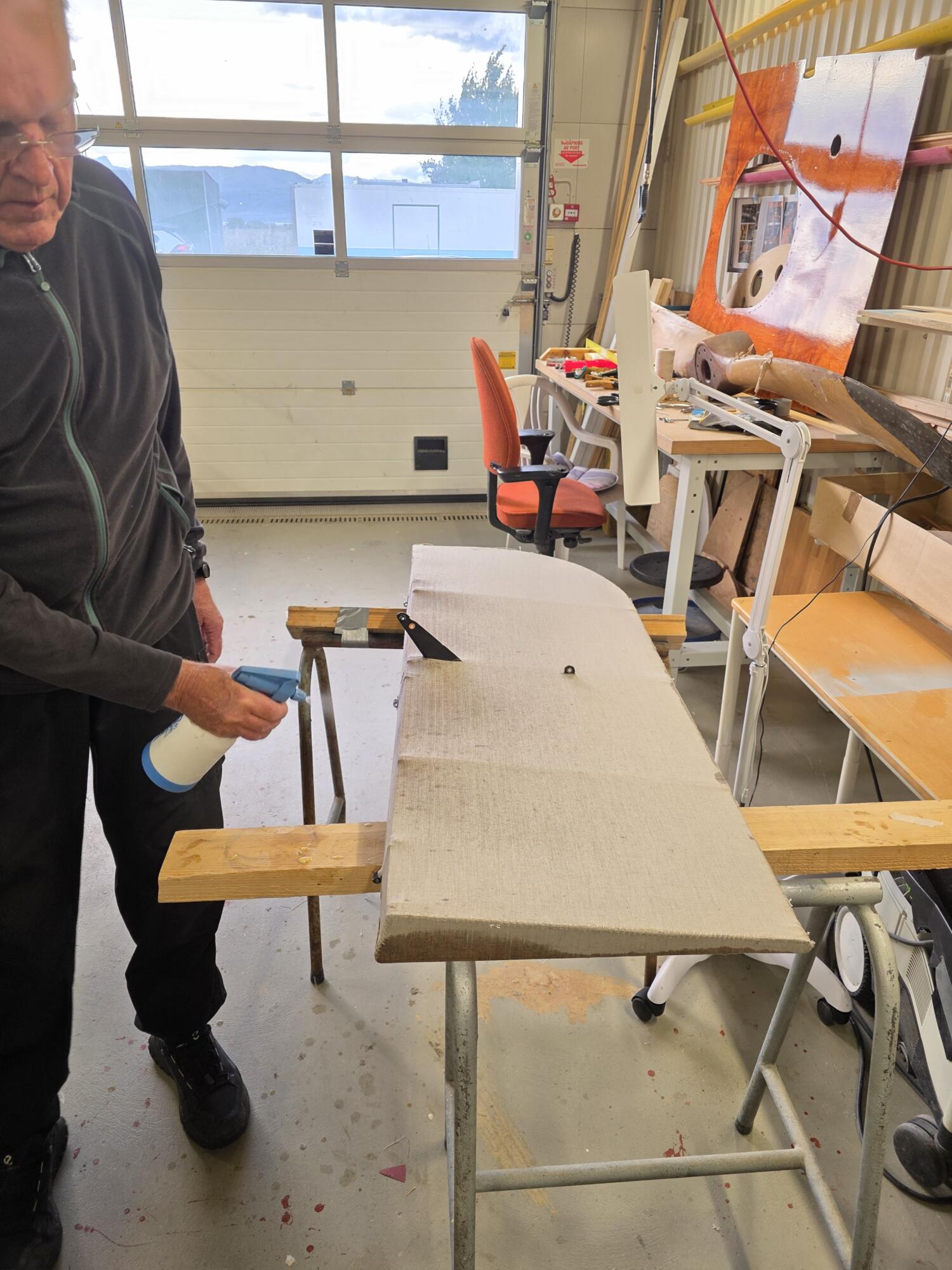
15.09: It is particularly difficult to get the fabric neat in areas where, for example, a control horn or cable attachment passes through the fabric.
© AM
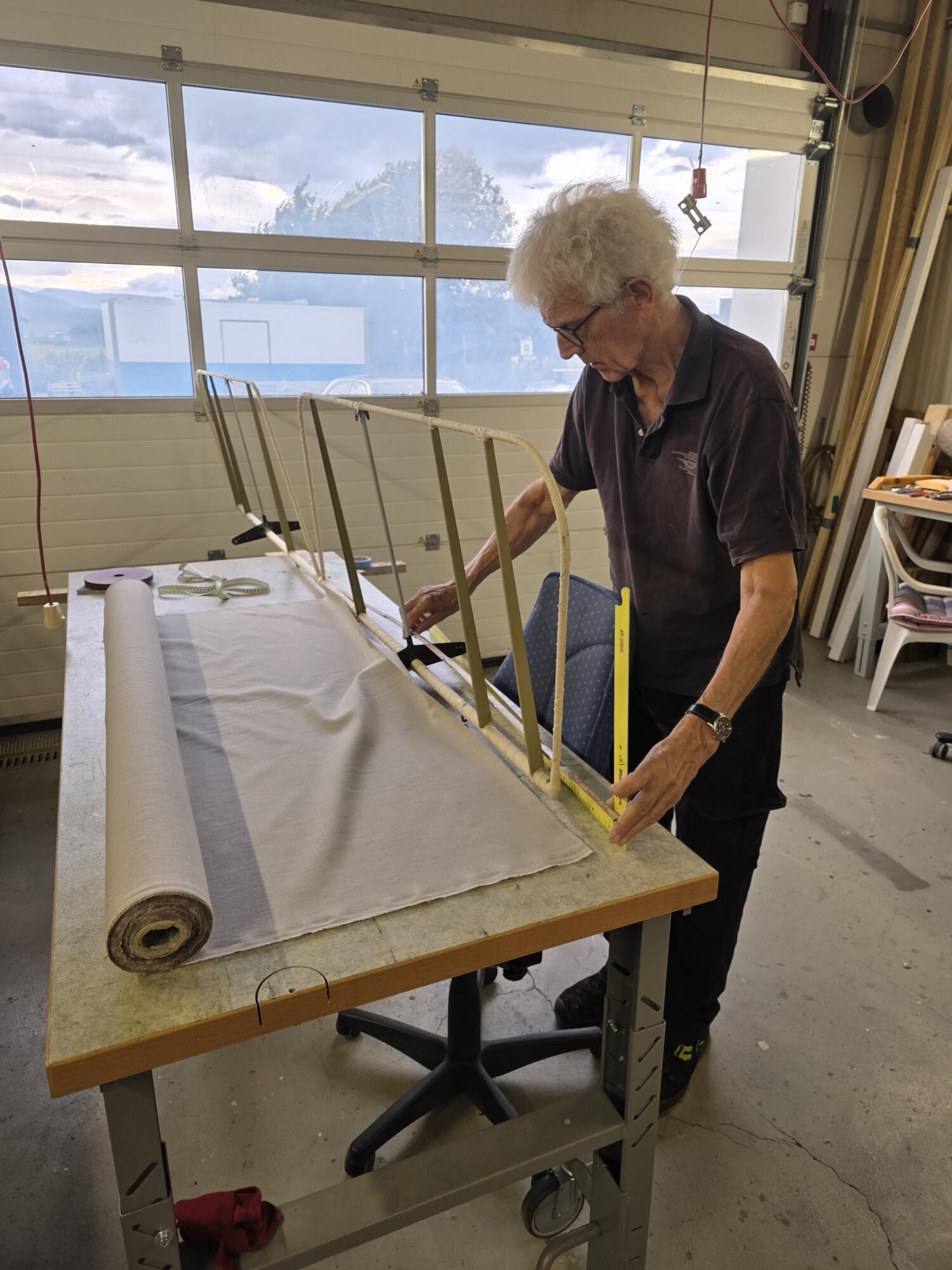
15.09: Gunnar measures up the fabric that is to cover the elevator. If the piece of cloth turns out too small it is close to a catastrophe. It is therefore best to have a little to spare to begin with.
© AM
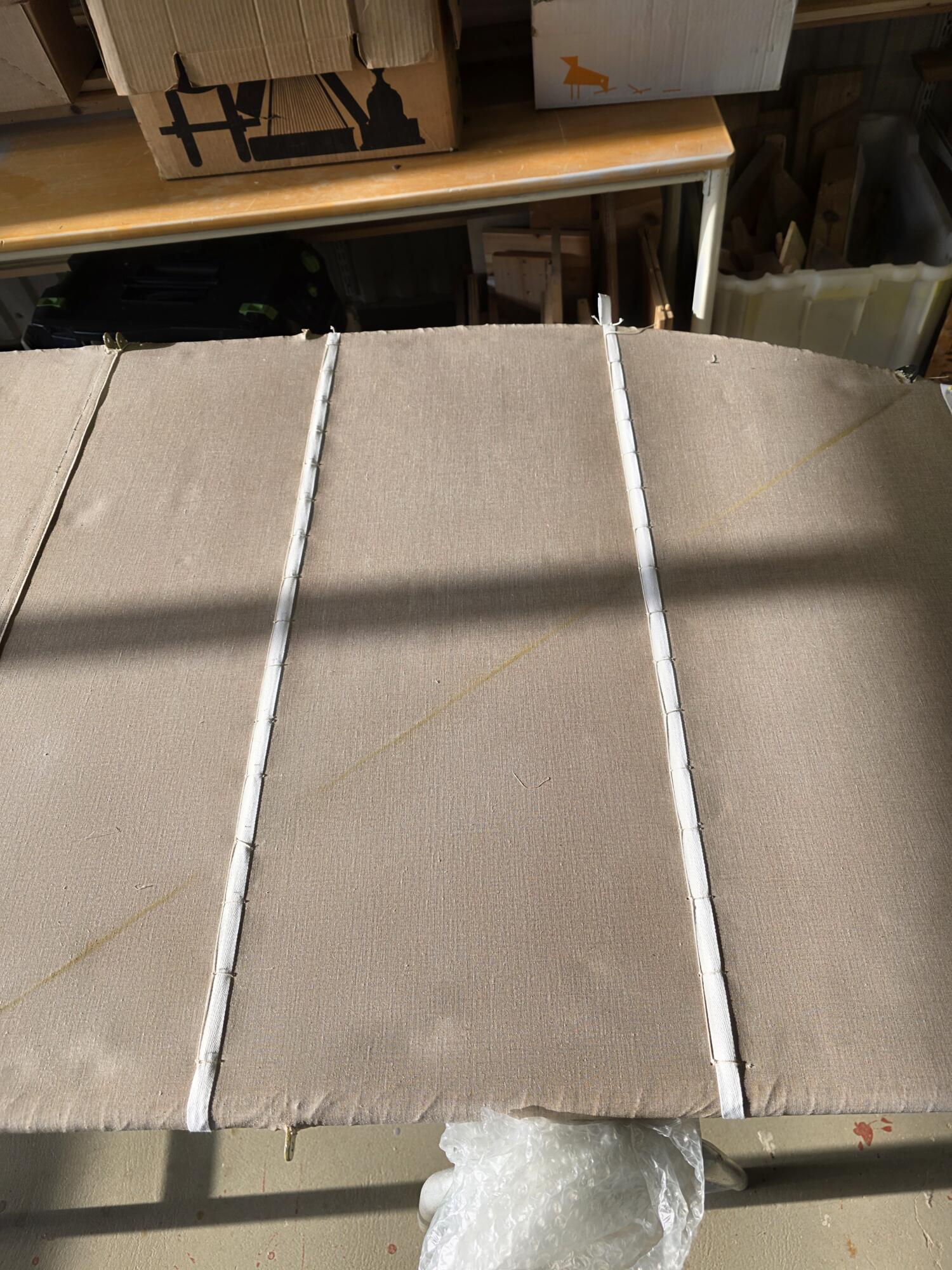
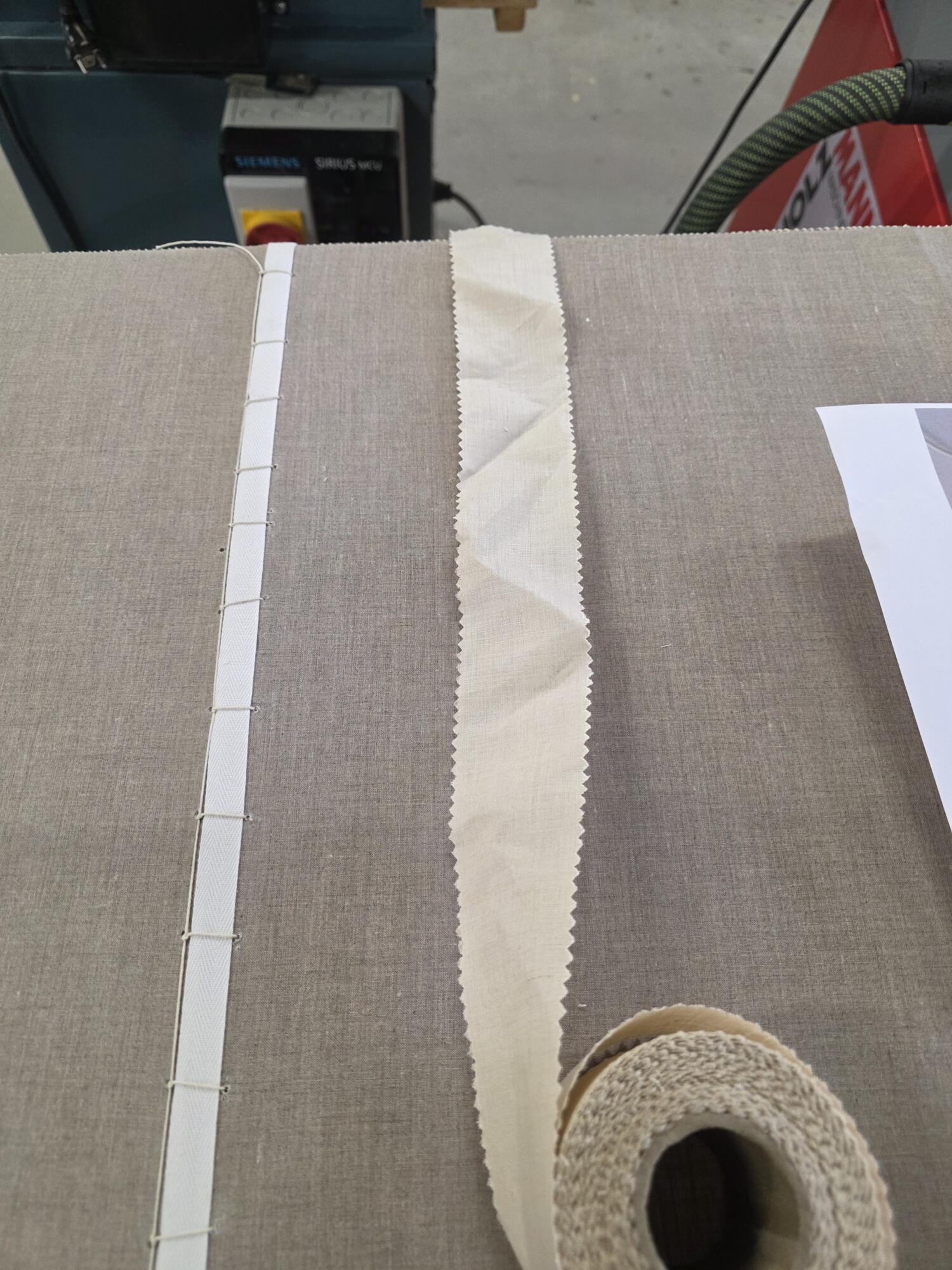
15.09: The fabric is not only attached to the framework along the outer edges. It is also attached to the ribs. A linen tape is laid over the ribs as reinforcement before sewing. Finally a zigzag tape is glued over it all using dope.
© AM
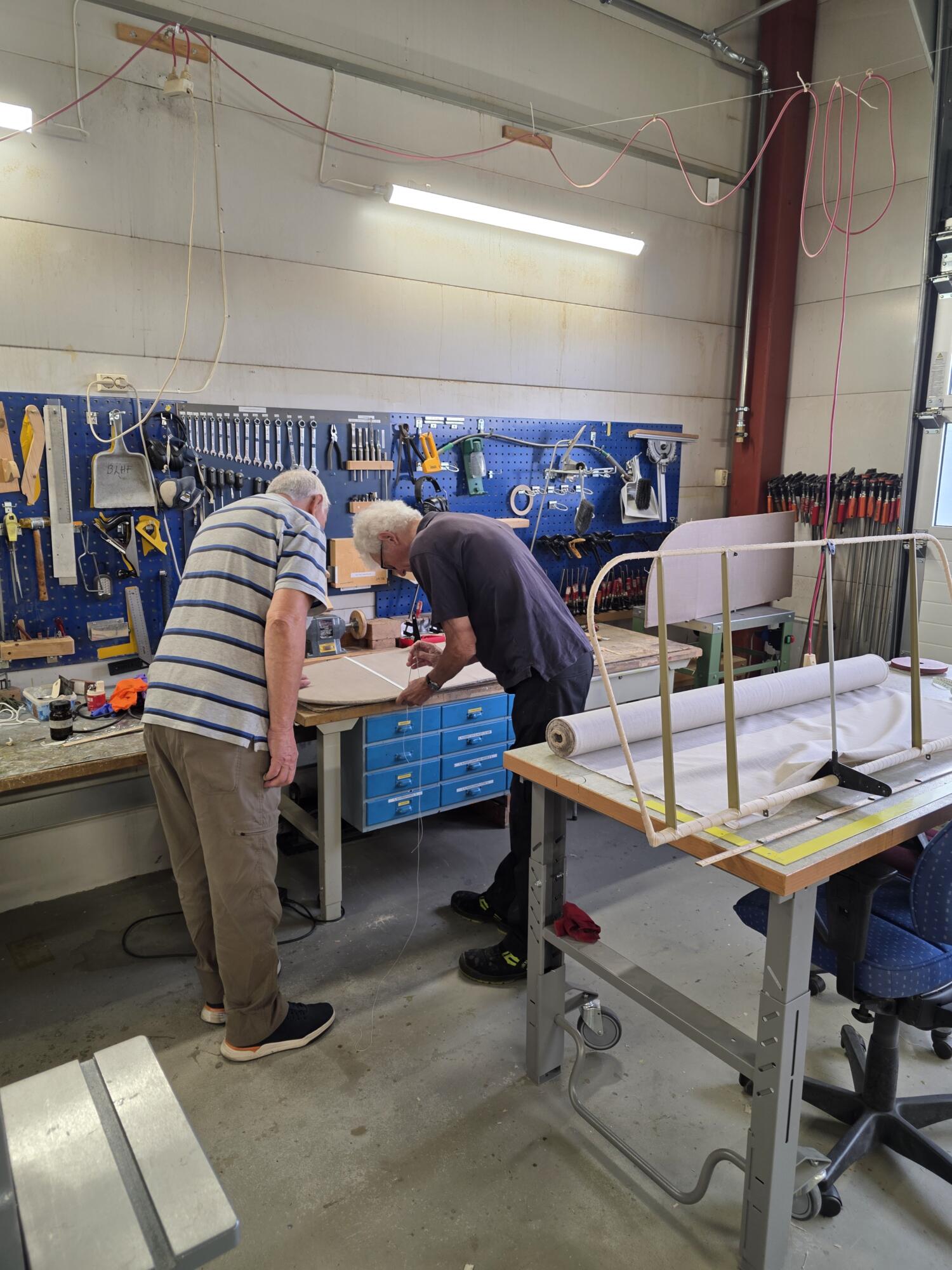
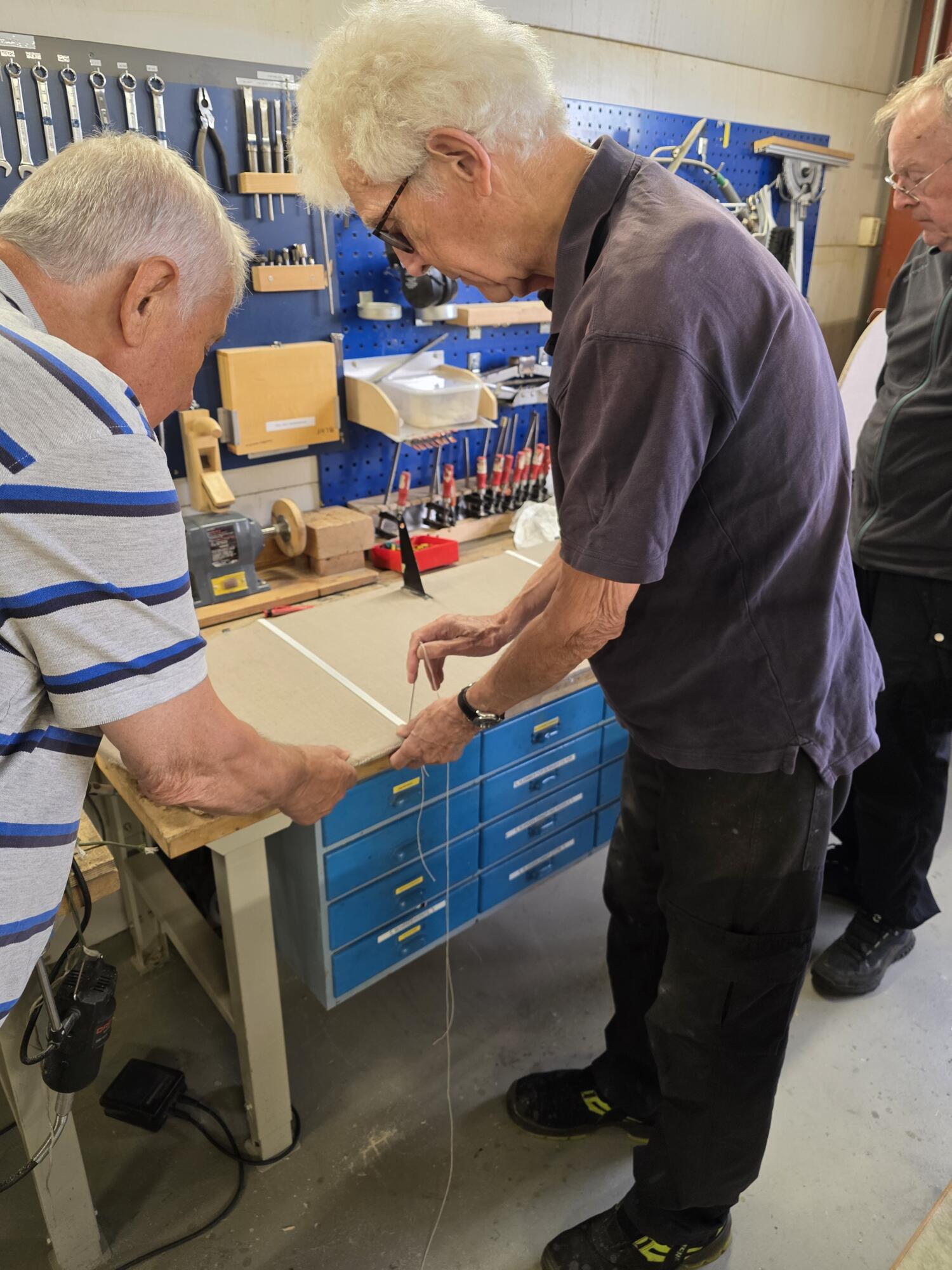
15.09: Here one of the helpers who drop by now and then receives instruction from Gunnar. The stitches are special, as are the knots, not to mention the needle that has to go right through the wing.
© AM
15.09: The stitches are the hardest thing to get right at the beginning. A few spots of blood got onto the fabric at first, but in time it went without injury.
© AM
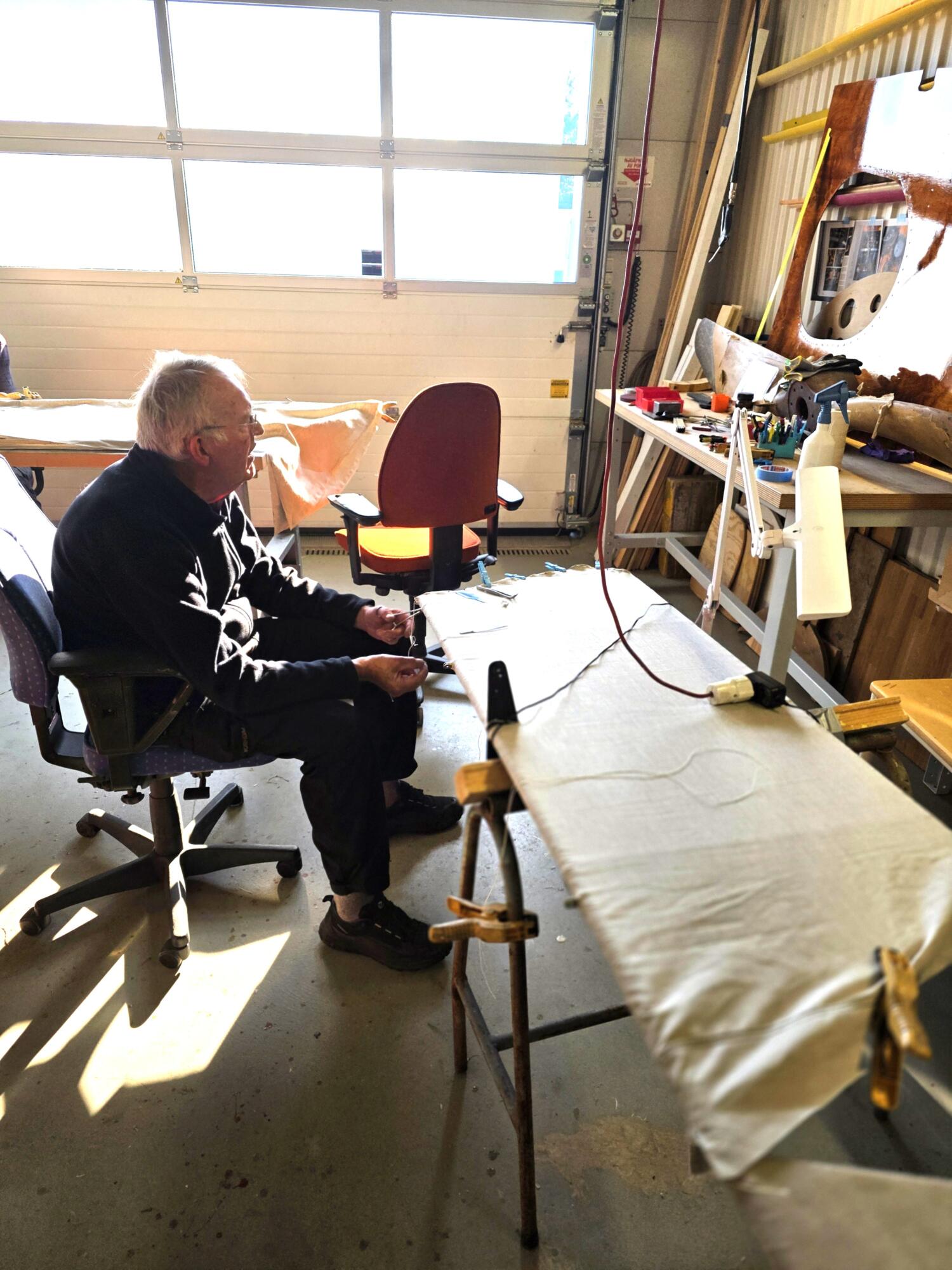
19.09: Good daylight helps when doing fine work. Here it is the stabiliser being covered.
© AM
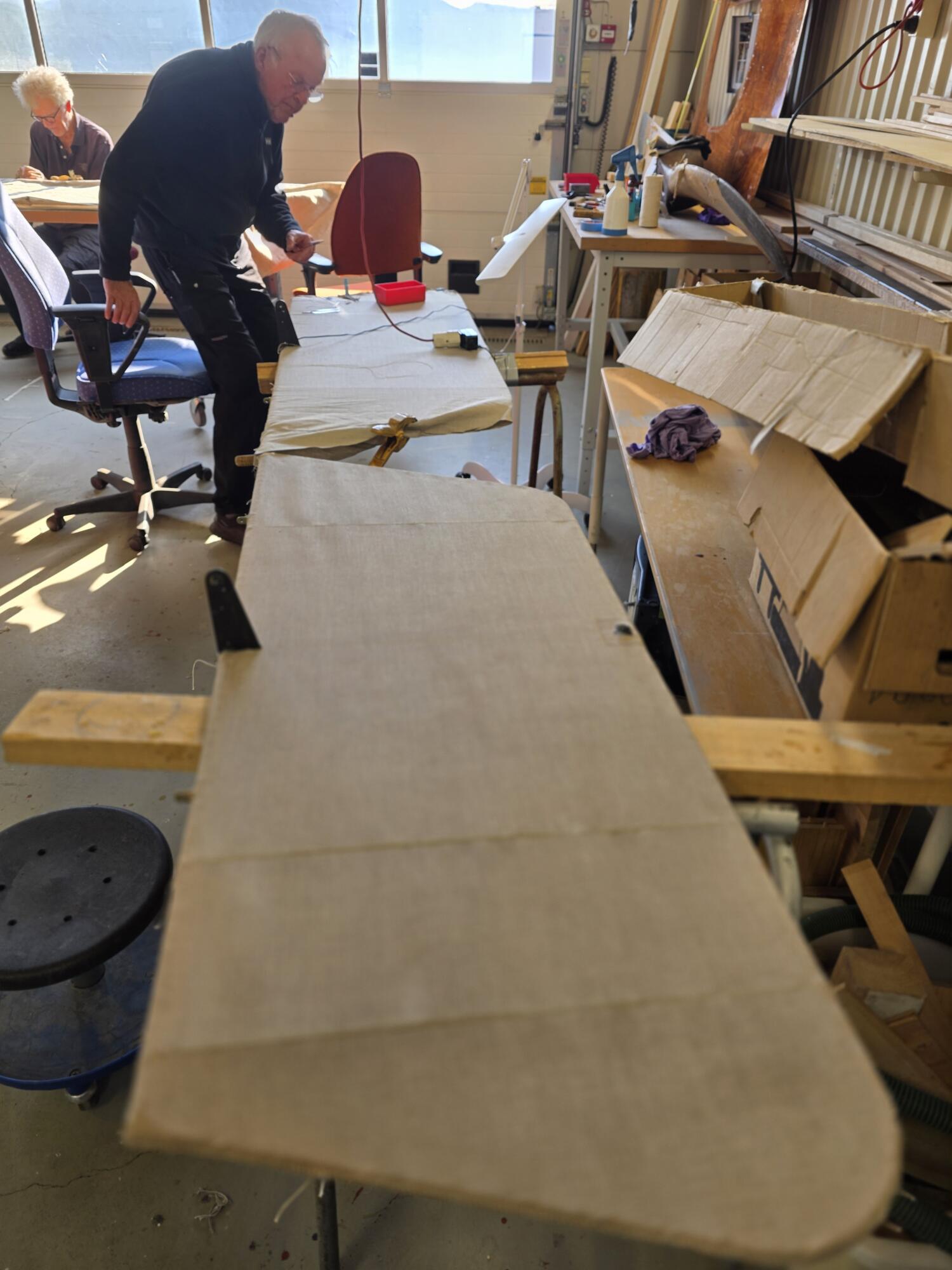
19.09: The stabiliser is nearing completion of sewing along the outer edge of the framework..
© AM
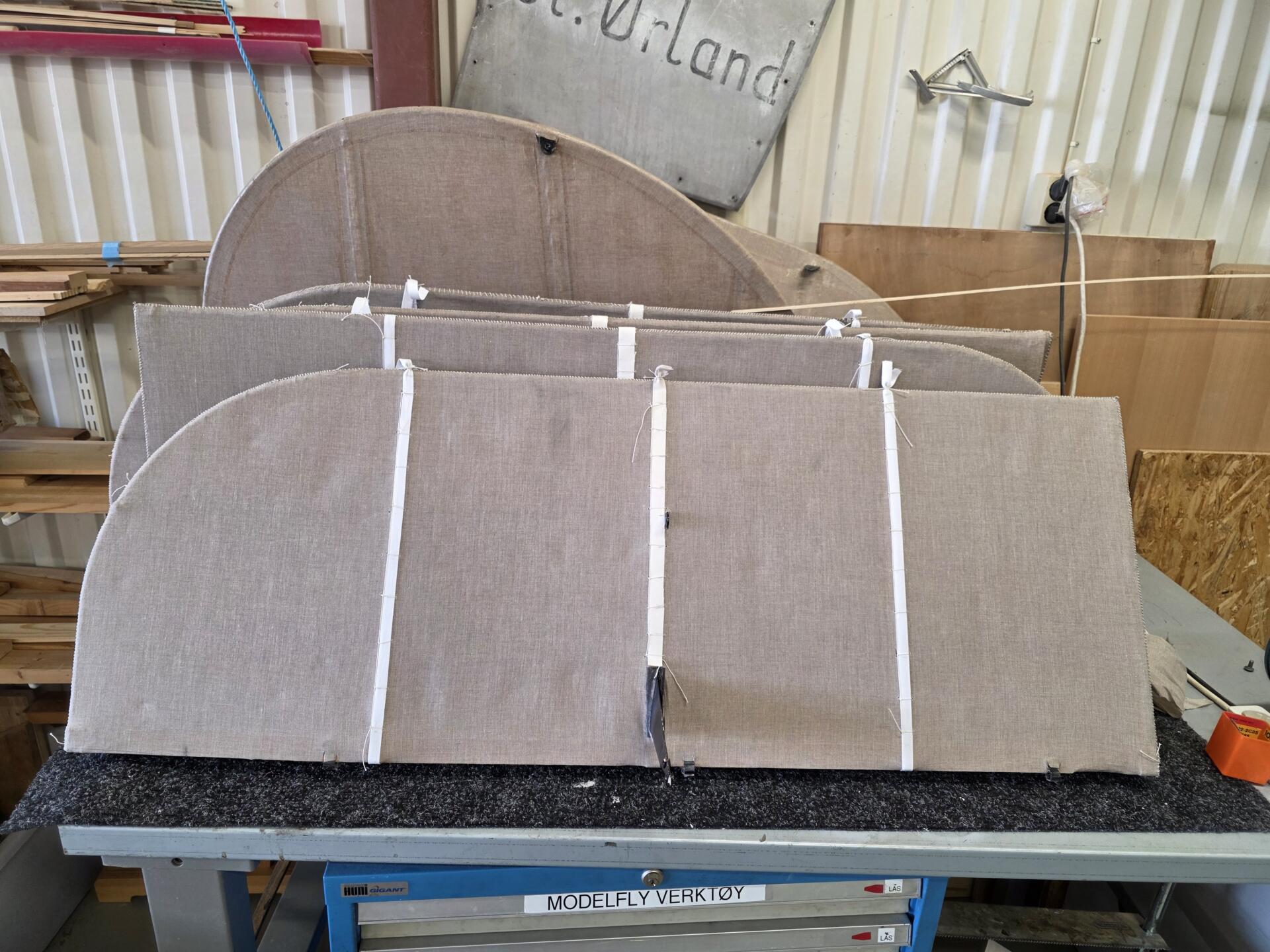
19.09: Finished rudders of various kinds ready for dope.
© AM
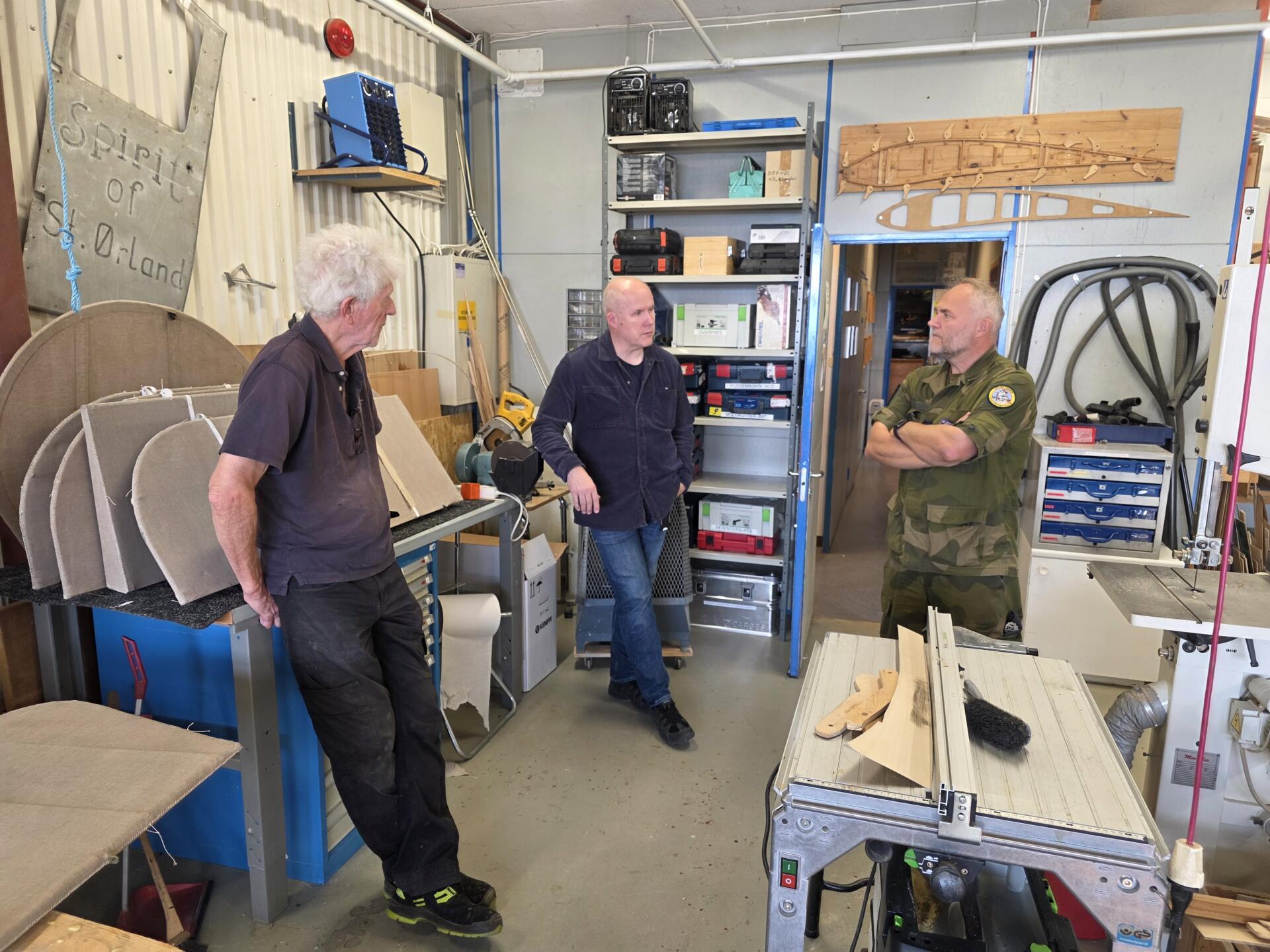
19.09: Anders Utgård and Ole Sigurd Sørensen discuss an offer to have the aircraft put into a large paint booth to apply the final finish.
© AM
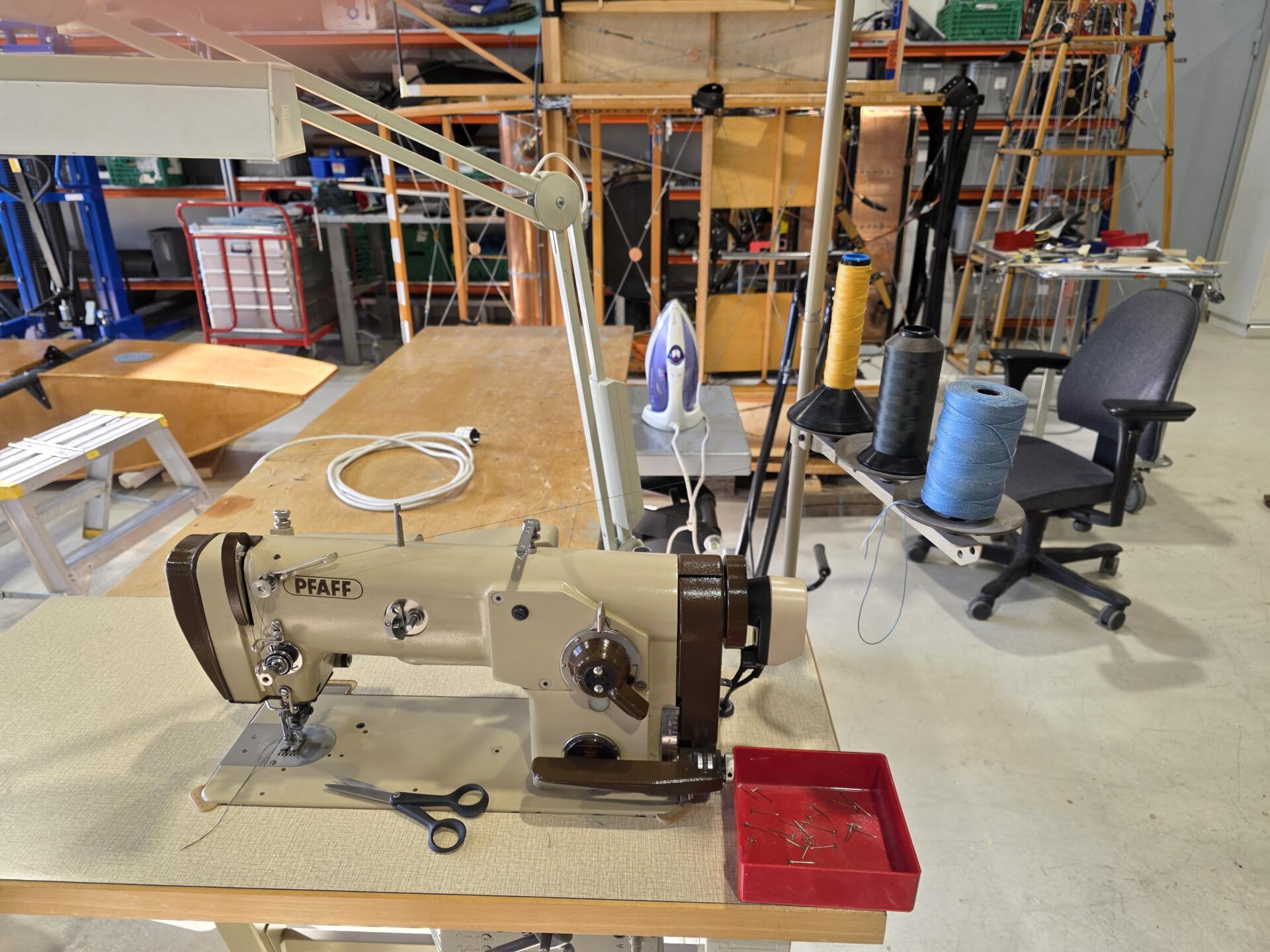
19.09: This sewing machine came as a defective unit from Ground Equipment at the air station. It was repaired and has been used for various tasks. Among other things it was used to repair brake parachutes. A sewing room has been set up in the main workshop.
© AM
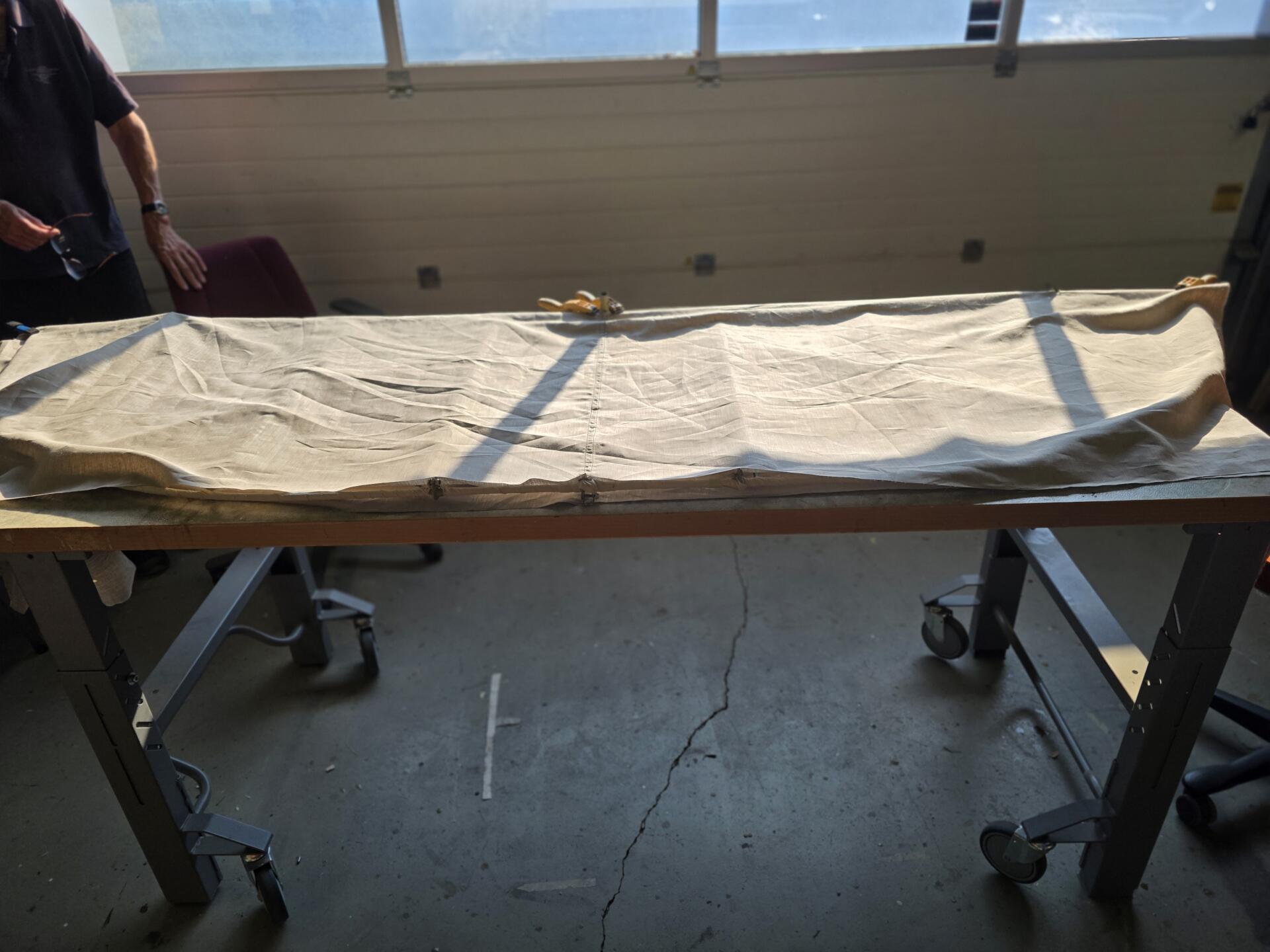
19.09: As the parts to be covered got bigger, pieces of fabric had to be sewn together. That required a special seam that could be set on the sewing machine.
© AM
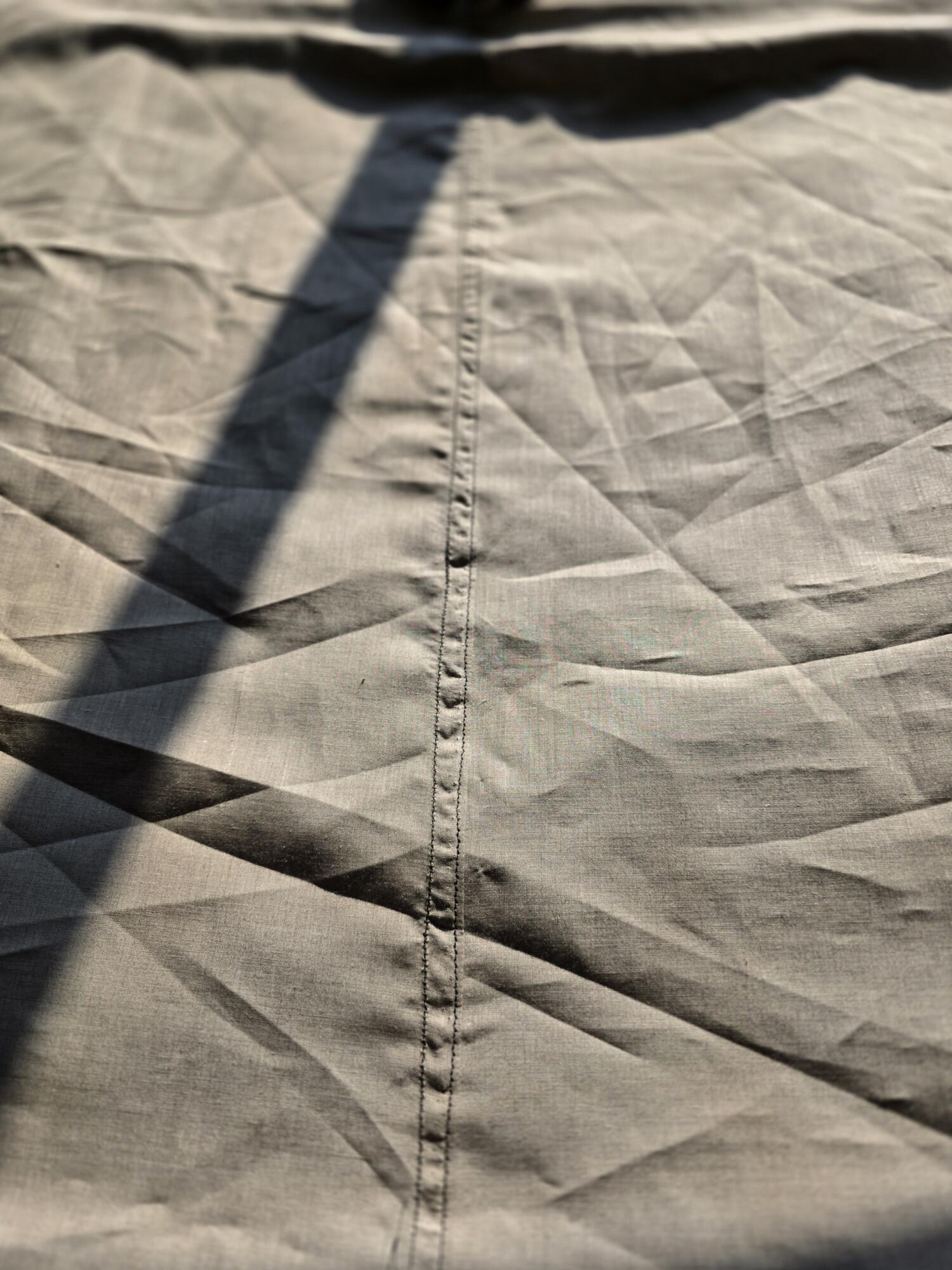
19.09: The seam is to be double.
© AM
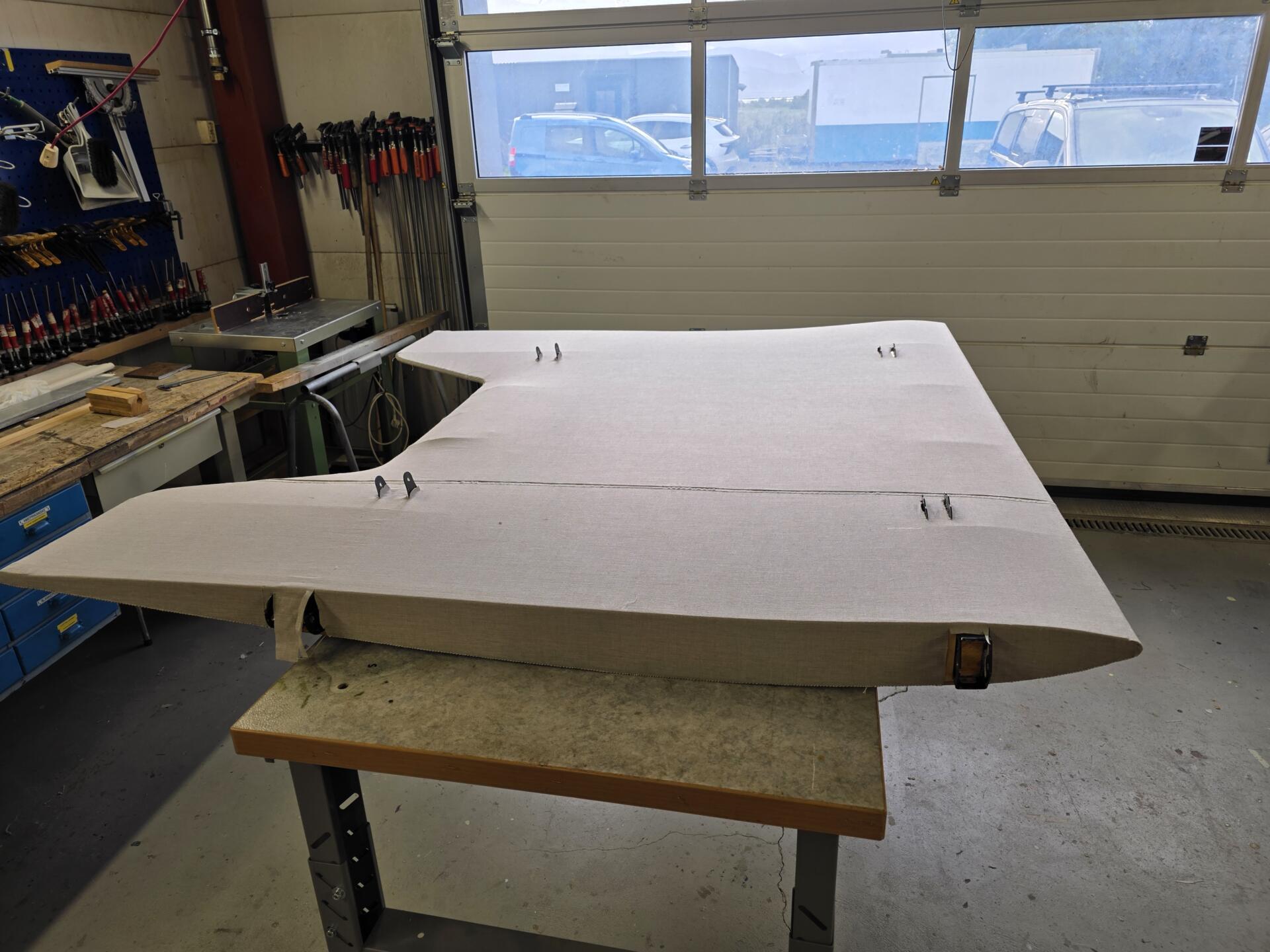
26.09: The centre piece of the upper wing, above the cockpit, has had its edges sewn.
© AM
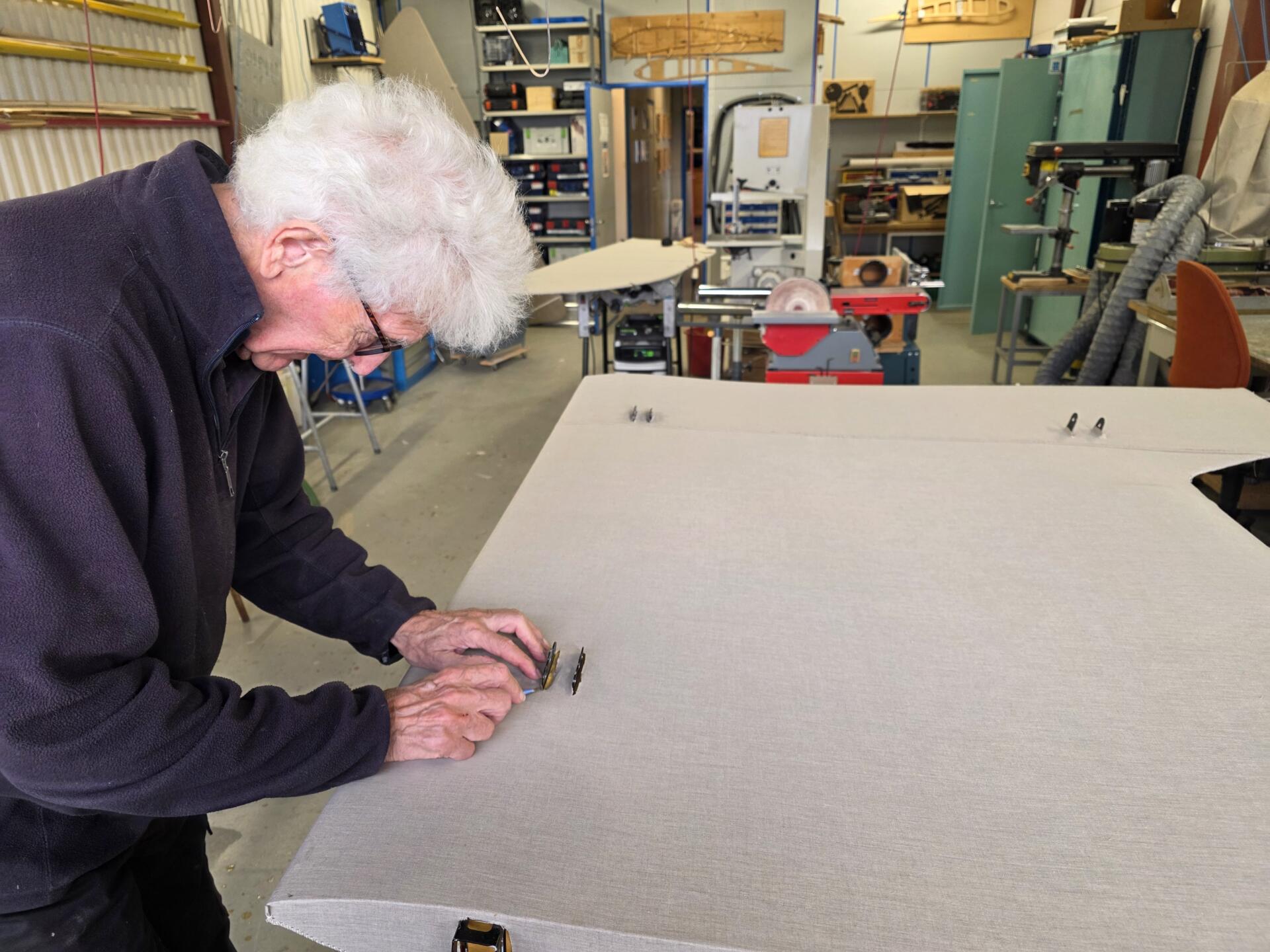
26.09: A bit of trimming is needed before doping the reinforcements around the cut-outs in the fabric.
© AM
26.09: The stabiliser. It is sewn so tightly that it does not need water treatment.
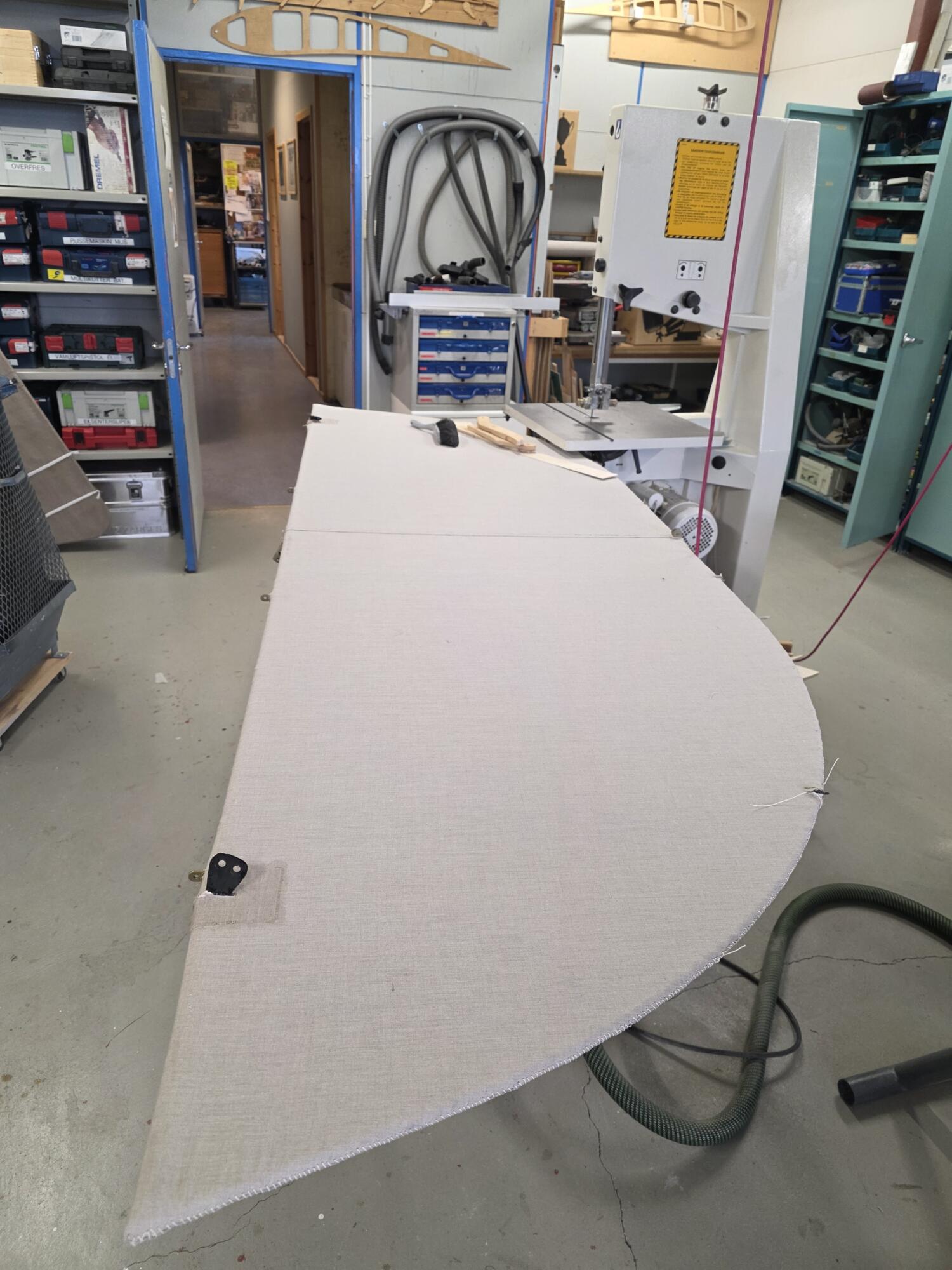
© AM
26.09: Ready to sew on the reinforcements and sew the fabric to the ribs of the stabiliser.
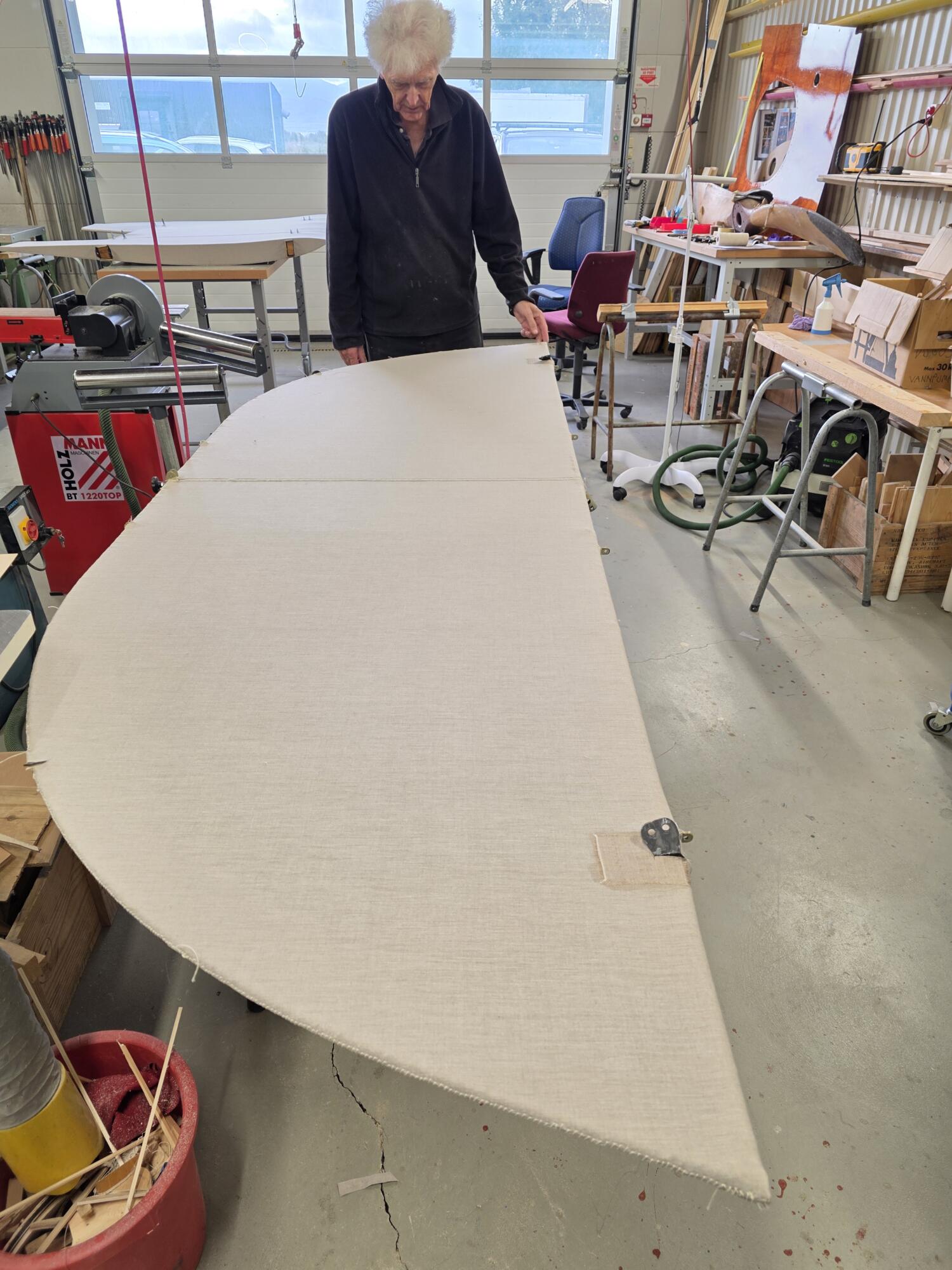
© AM
30.09: These strips of cloth are to be glued with dope over the seams.
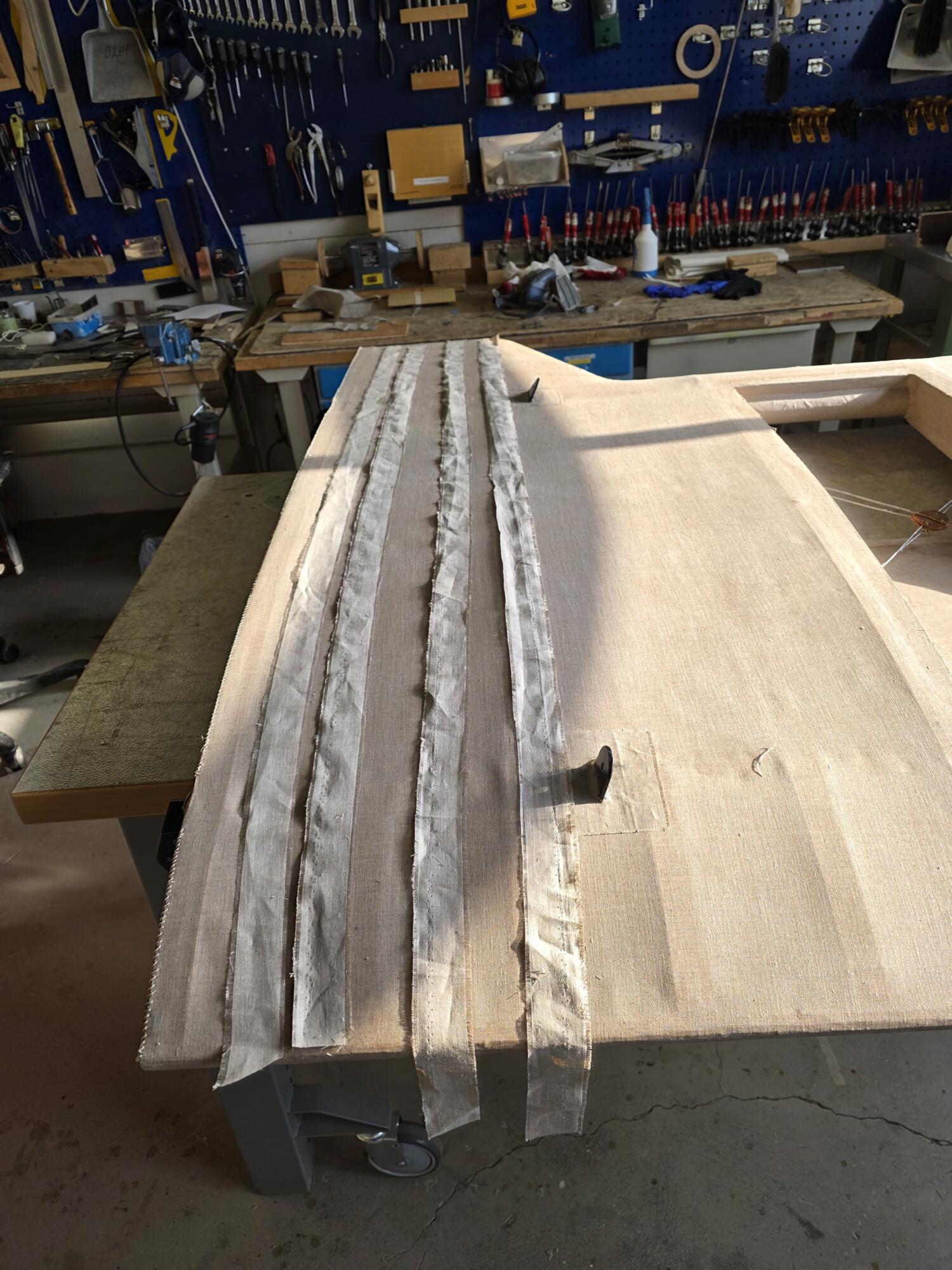
© AM
30.09: The shadow creates an optical illusion. This is the stabiliser, where reinforcements are sewn on at the same time as the fabric is attached to the ribs
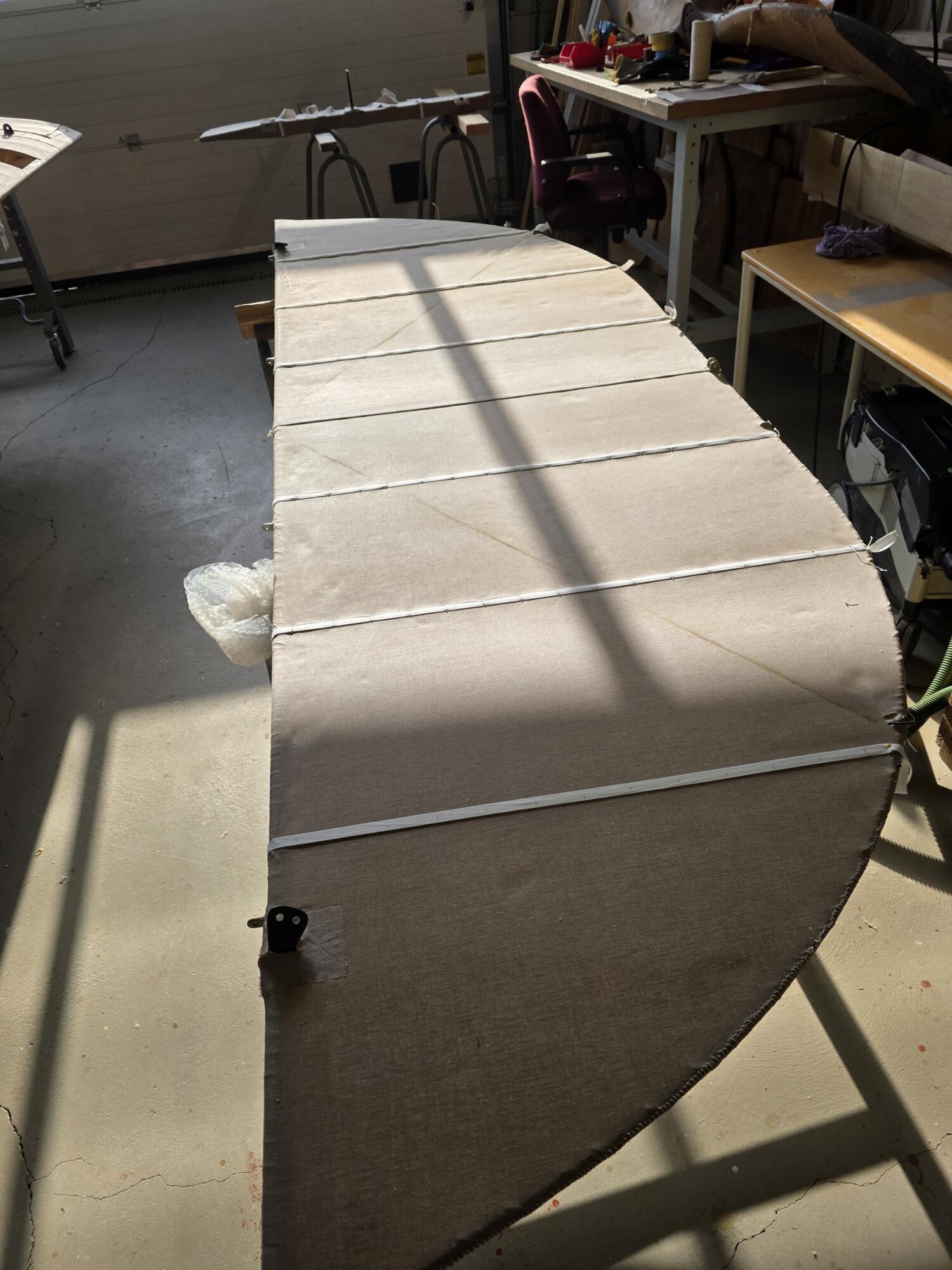
© AM
30.09: Enlarge the picture and the stitches show clearly.