
Hull and engine March–April 2022
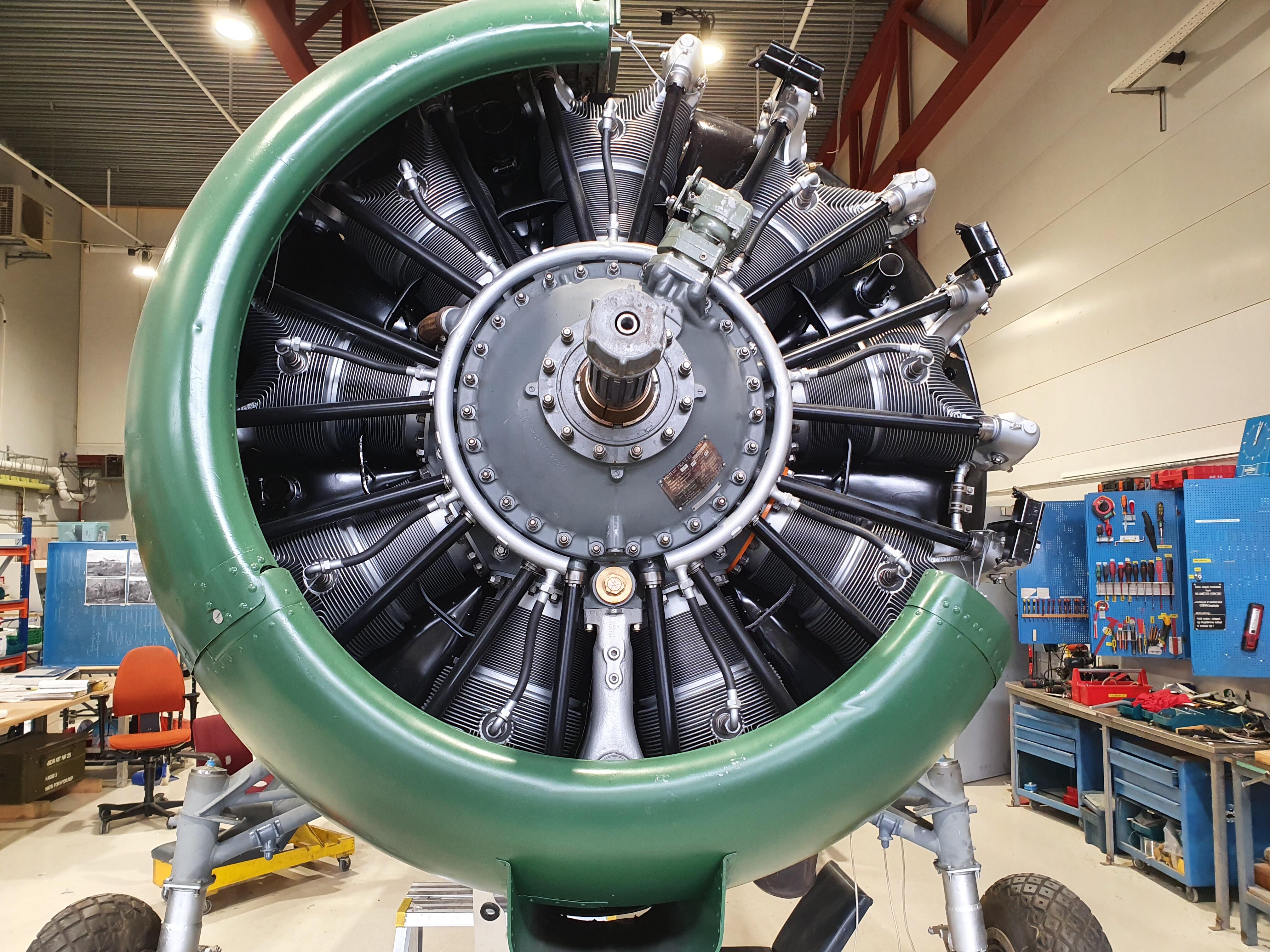
There is only one thing to say about the engine: Gorgeous!! New, small details keep appearing that make the restoration more and more complete
23.04.2022
Click on the pictures
There is only one thing to say about the engine: It is goodlooking !!
New, small details are constantly emerging that help to make the restoration more and more complete.
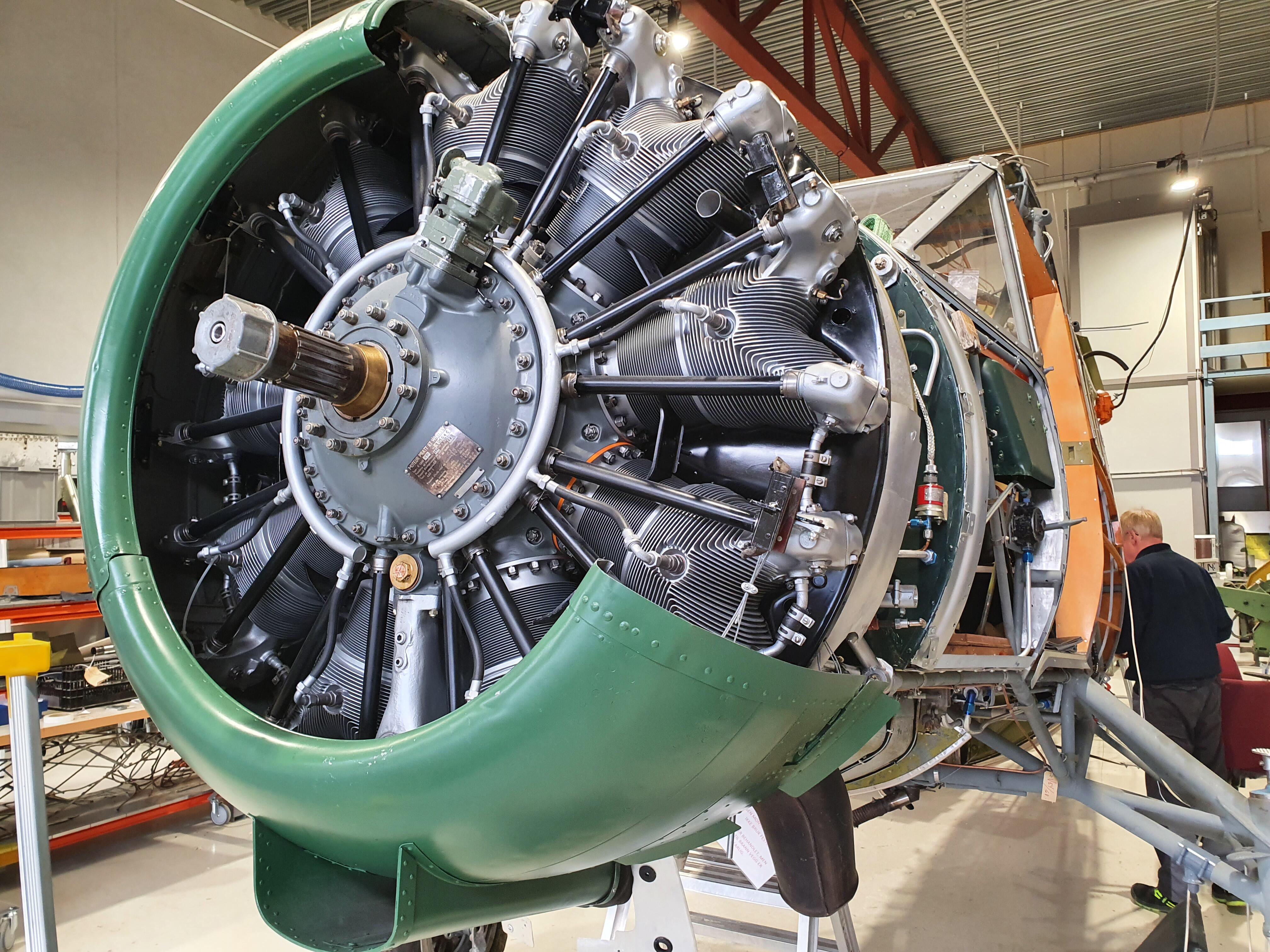
The open side is really nice
Click on the pictures
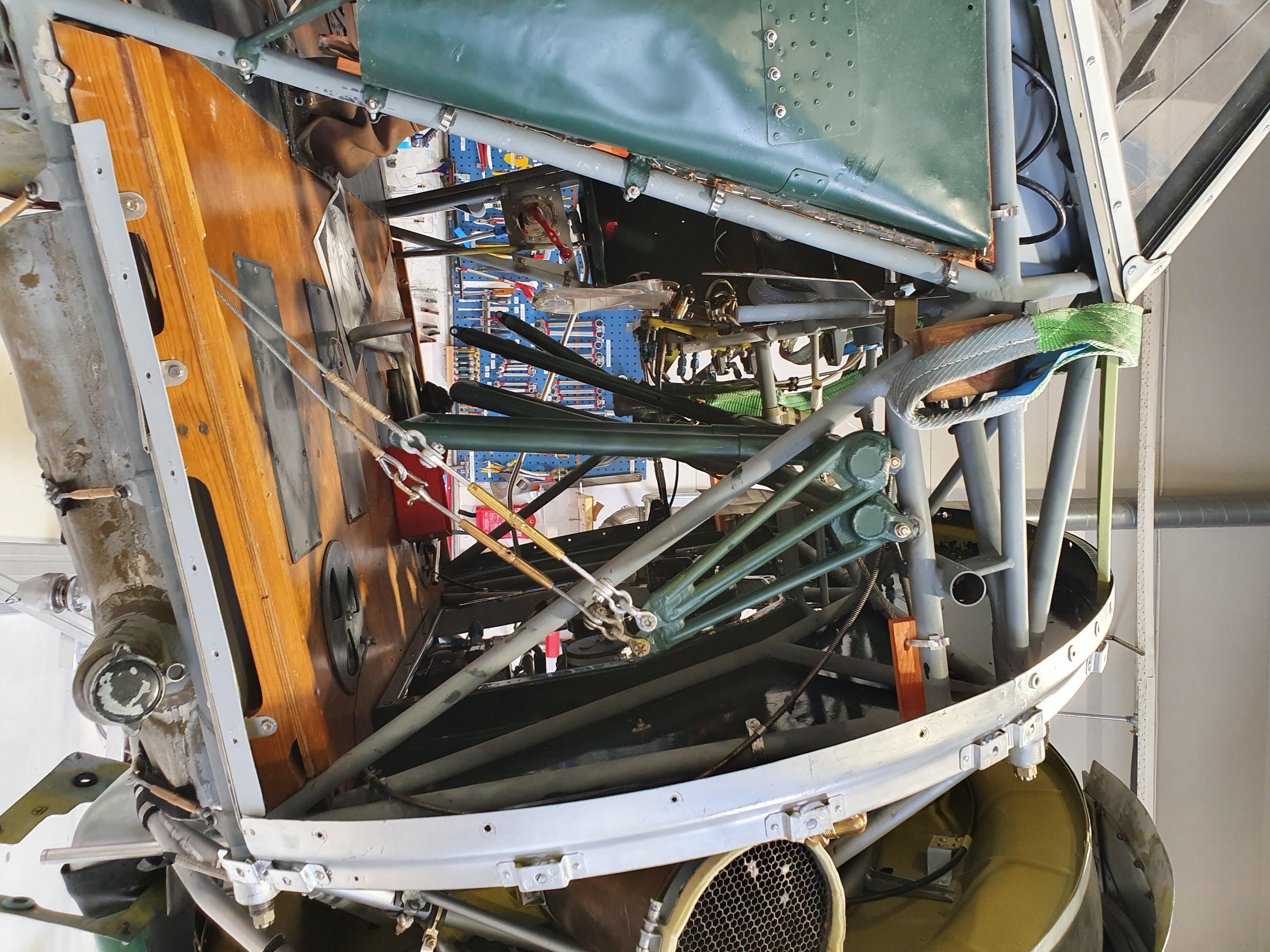
The space between the engine and the firewall is basically cramped. As new parts, controls and transmissions come into place, it becomes even tighter. In this part of the process, it is necessary to know the correct order for the assembly of the parts, otherwise it will be doing the job over again.
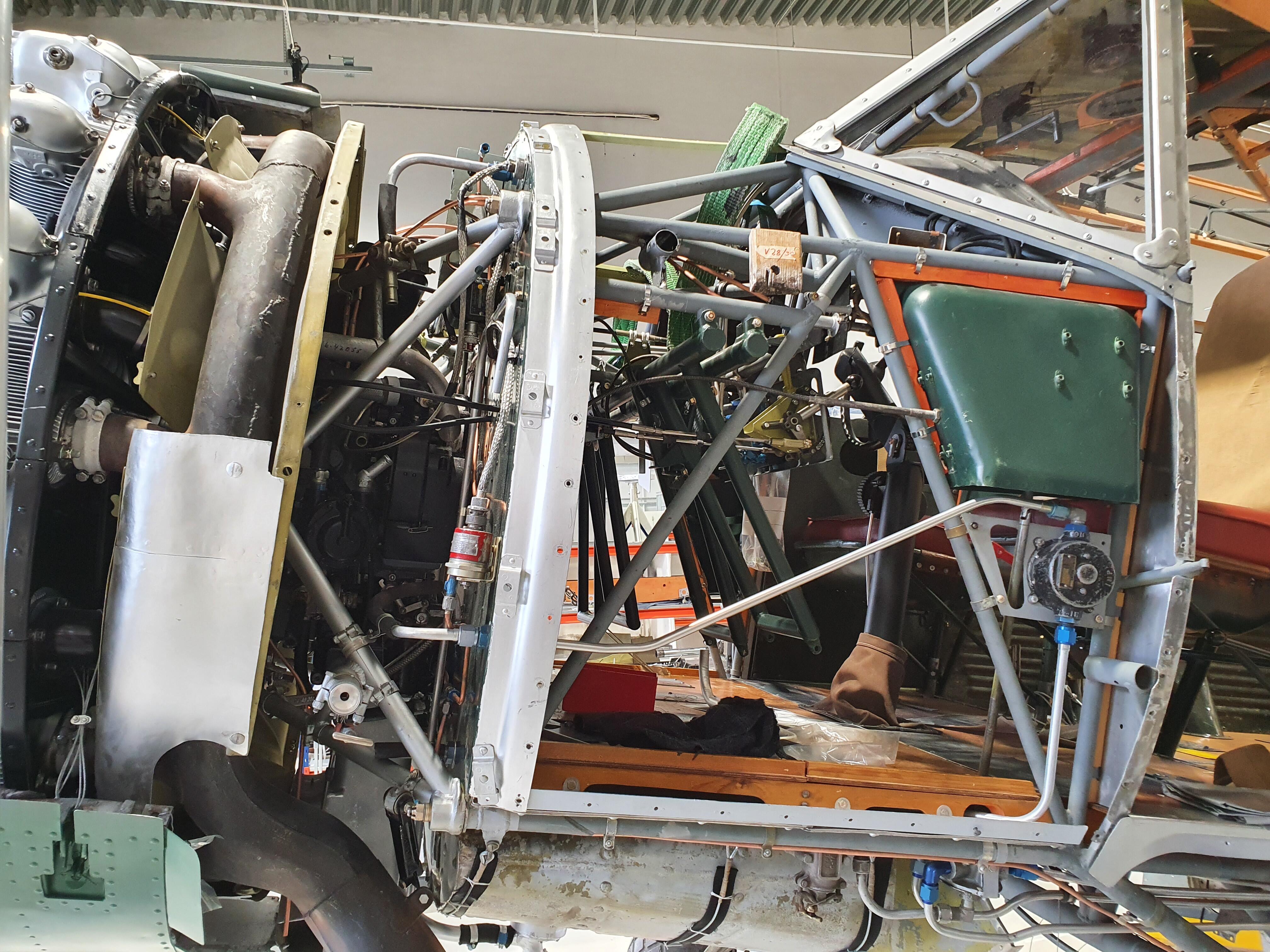
Also at the front of the cockpit, under and behind the instrument panel, there is a lot that needs to be in stalled. John has done most of the "plumbing work". First he made the parts, adapted them and finally got them in place.
...
Right side.
The strips on the underside of the hull are in place. They also keep the cowering away from the fuel tank.
In some places, extra reinforcements must be made to protect the fabric. On the left side, under the door and cockpit, a plate of thin birch veneer is attached. The same is done on the opposite side of the hull. These two plywood boards make a fastening for a wider, but thinner plywood sheet that covers the underside of the hull in the area where the tank is located. This sheet is fixed to the ribs protecting the tank area. In addition, all the plywood is covered with fabric in a last operation.
Left side.
We can also see that Gunnar has stretched the wires to the tail surfaces, one to each half of the elevator and two to the rudder. The wires are lead through guides made of a kind of bakelite, only much stronger. The wires are connected to the pilot’s stick in the cockpit and to the tail surfaces. They are tightened and adjusted using turn- buckles.
Bård and Gunnar have taken care of the wooden stringers that are attached to metal ribs. The cloth these planes were covered with was attached to these stringers. If the stringers do not fit properly or do not follow the correct curves, the hull will look as if it has dents.
This hull shall not be covered because we want to show the fantastic construction that makes up the hull.
Here the wires are guided by means of pulleys.
This keel marked "Grip ikke her" ("Do not grab here")is not common on all Norsemans. On our plane, there is probably a Norwegian-made modification. It may look like it was made in connection with the fact that the rudder itself has changed both in shape and area. Things indicate that this was made or modified in Horten, and German screws with millimeter threads and a German head were used in the construction.
The pictures show endings, transitions and reinforcements in the tail section, all made of aluminum. It is the transition between the hull and the fin, between the hull and the stabilizer and the end of the hull itself. Yet there is only a trial assembly to see what can be used of what is original parts, and whether something new must be made.