
Ju 52 at Reinoksbreen
Junkers Ju 52/3m Reinoksbreen in Sørfold/Hamarøy municipalities, Nordland.
3./KGzbv 108 WNr.2828 K1+AL
8th of June 1940
The Junker 52 aero plane which our engine comes from crashed on Reinoksbreen (a glacier) on the 8th of June 1940. The plane was supposed to drop supplies to German forces who at that time tried to reach the Narvik front where General Dietl's forces were under hard press from Norwegian, French and Polish troops. This German rescue expedition, which mostly consisted of Austrian mountain soliders, had started their march from Sørfold and were supposed to go by foot up to Narvik, which was190 km away. This mission was called Operation Buffalo. The snow was deep and wet in the spring break, and to avoid the fjords they had to go well inland, parallel to the Swedish border.
The rescue force was supplied by drops from aero planes."Our aircraft" was on such a replenishment mission when it flew into bad weather with zero visibility and crash landed on Reinoksbreen. The crew survived and could bring themselves down from the glacier to one of the German camps in Sørfold. One can still today see remains of the camps in the area.
The snow and ice buried the plane which had come to rest in approx. 1400 meters altitude. Whether it is due to global warming or natural temperature increase should be left unsaid, but in 1988, the aircraft appeared again, and one engine was brought down, restored and put into the Ju 52, which is on display at Norsk Luftfartsmuseum, as the center engine. The pictures below this text are from two of the rescue expeditions that year.
As a consequence of the hydro electric power development in Kobbelv, Sørfold new roads were built, leading into the mountainous region, which then became more easily accessible. It was possible to go by car up to about 600 meter above sea level, but there were still 800 meter to be climbed. Several times people from Bodø Aviation Historical Society were up at the wreck, and by axe and chainsaw they cut loose ice from the remaining engines.
After the expiditions in 1988, the wreck was covered with snow and ice once again, and not until summer 2006 it became visible and the last two engines were brought down by helicopter and transported to Bodø where they were stored.
The engine we now are restoring is the center engine from the wreck. This engine will also be installed in the Ju 52 at the museum in due time.
Operation Bøffel, Arkiv Nordland: arkivinordland.no
From the 2006 expedition
In 2006 the engine we now are restoring was taken down from the glacier. The pictures show the struggel the crew had to get it out of the ice.
From the 1988 expedition
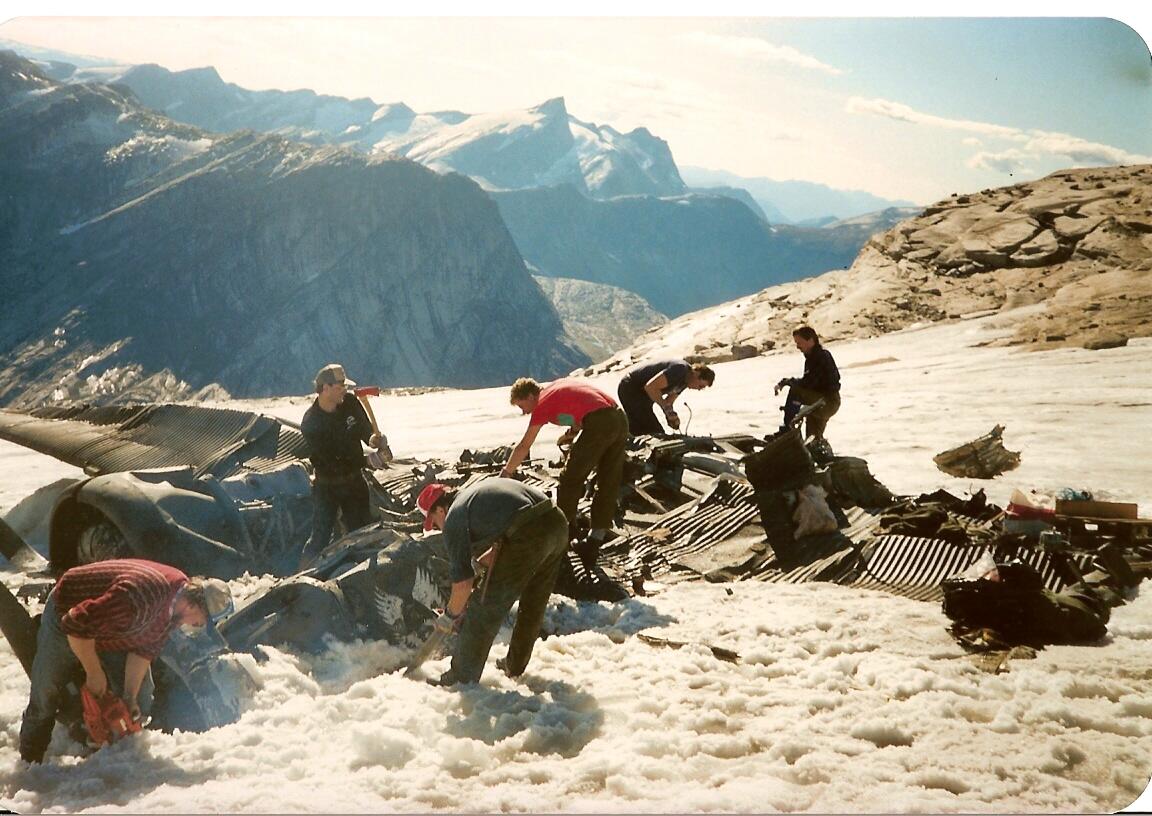
There was nothing to complain about regarding the view from the crash site. The scenery around Kobbelv is magnificent.
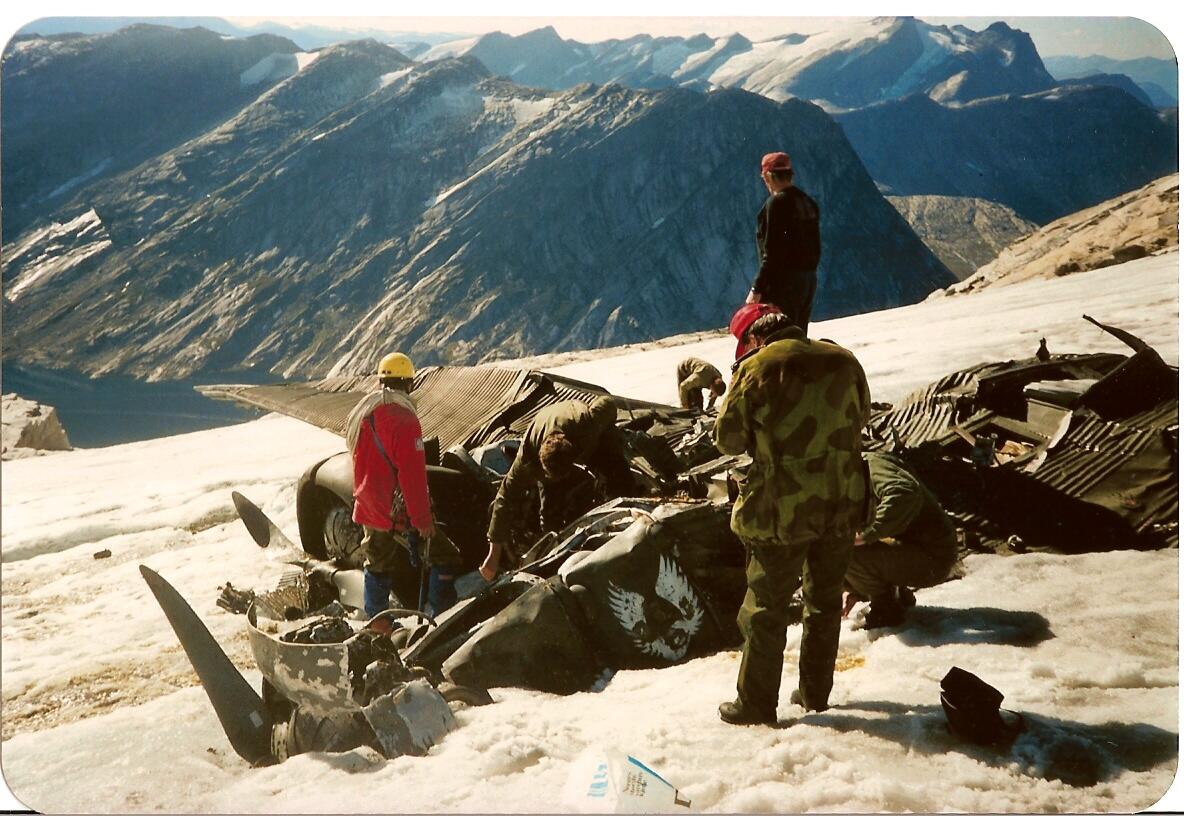
The crew who survived the crash were incredibly lucky. They hit, almost blind, the ice surface that forms a shelf. A little lower or a little higher, and they would have hit the rock wall.
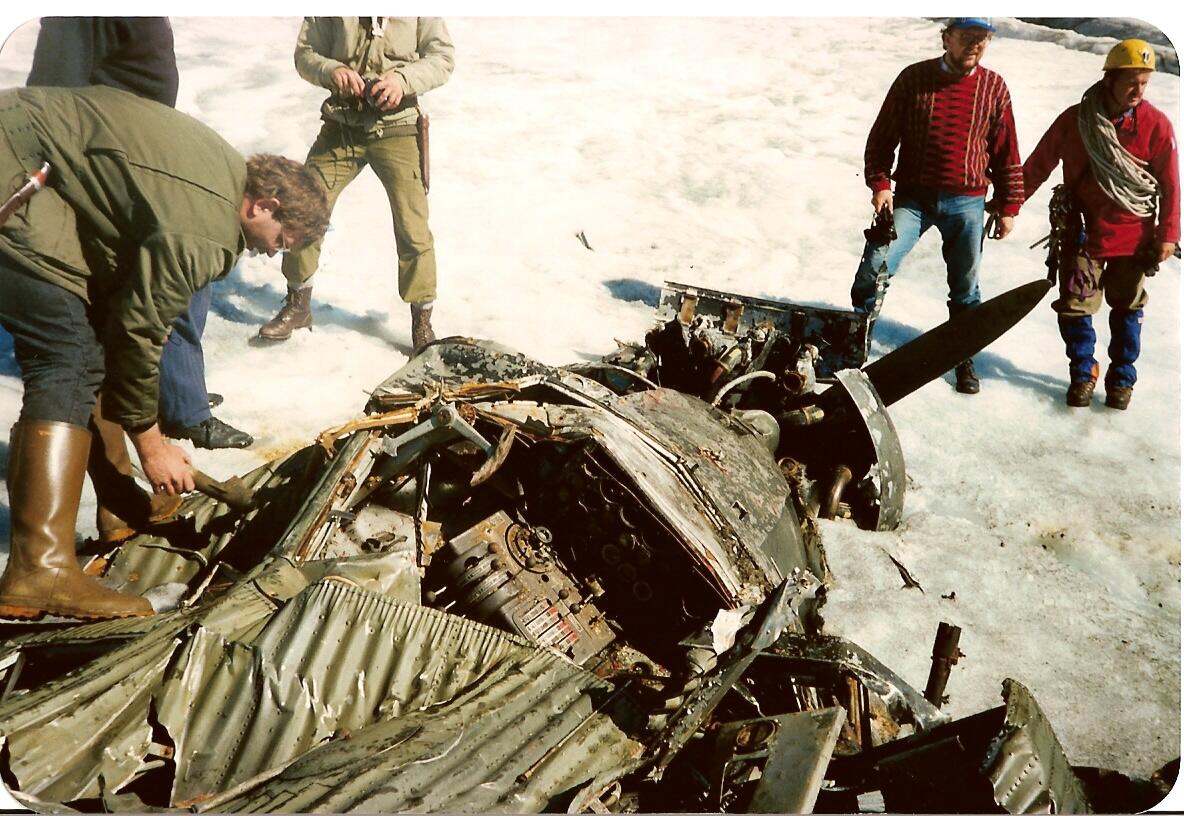
As can be seen from the pictures, the wreck with the engines has only partly come to light. Much is still stuck fast in the glacier ice. That year the right-hand engine was taken down with a Bell UH 1B helicopter.
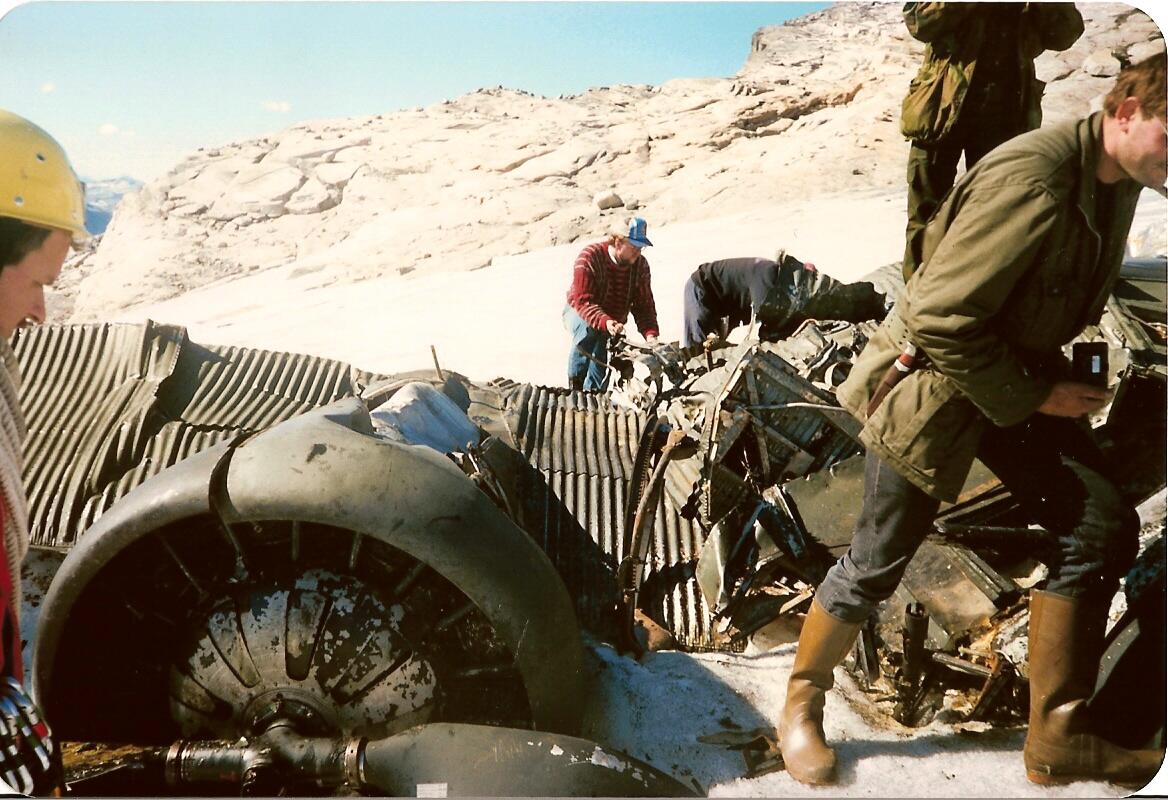
After this the aircraft disappeared again under snow and ice. The other two engines were not taken down until 2006.
The engine is retrieved in 1988.
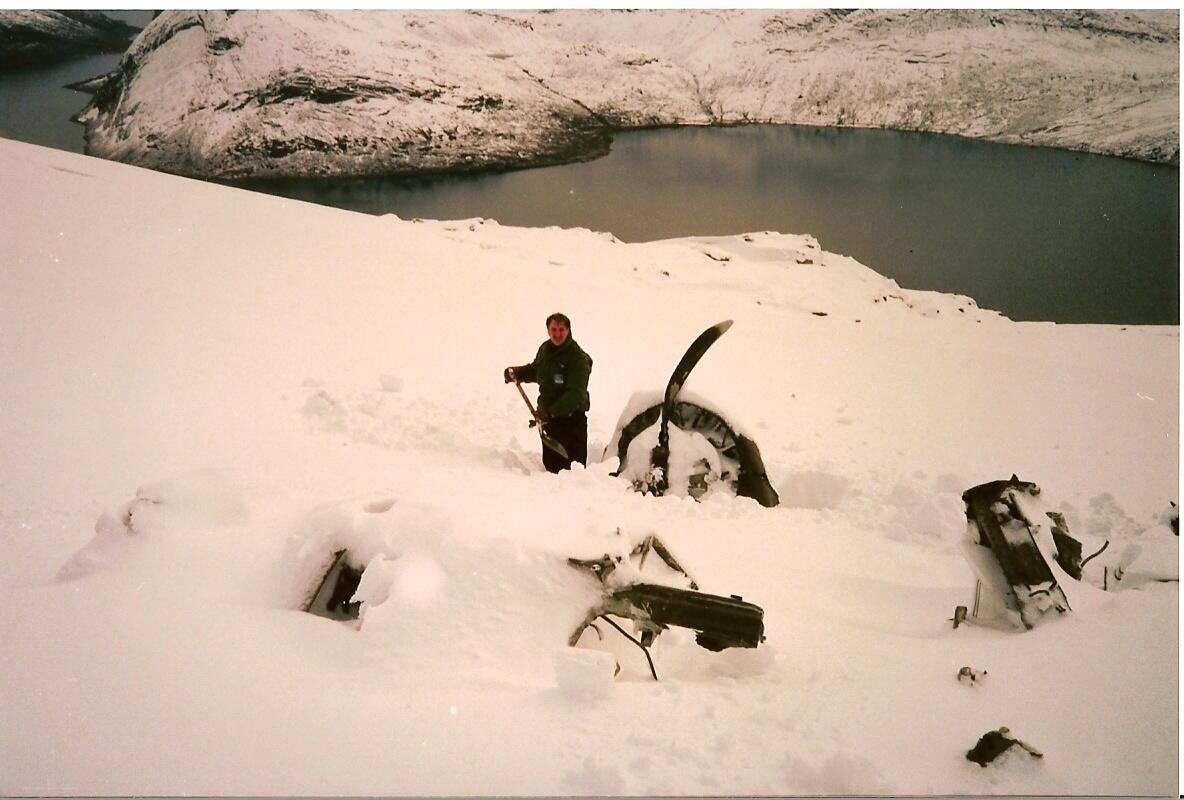
The engine that was taken down now stands as the centre engine on the Ju 52 in the exhibition at the Norwegian Aviation Museum. In the background, Lake Reinoksvannet.
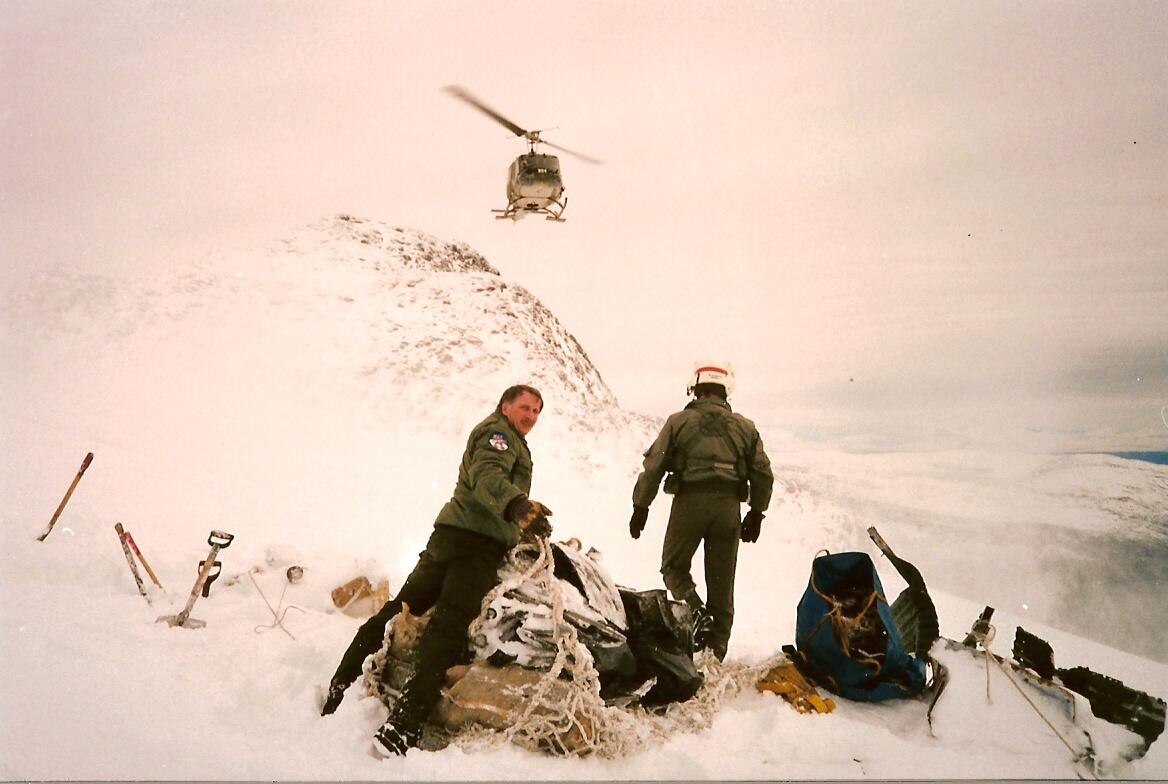
The load has to be packed and secured properly.
The cooperation with the armed forces was of invaluable help. Without helicopter assistance the engines would probably still be lying in the ice.
Ready for lifting various parts.